
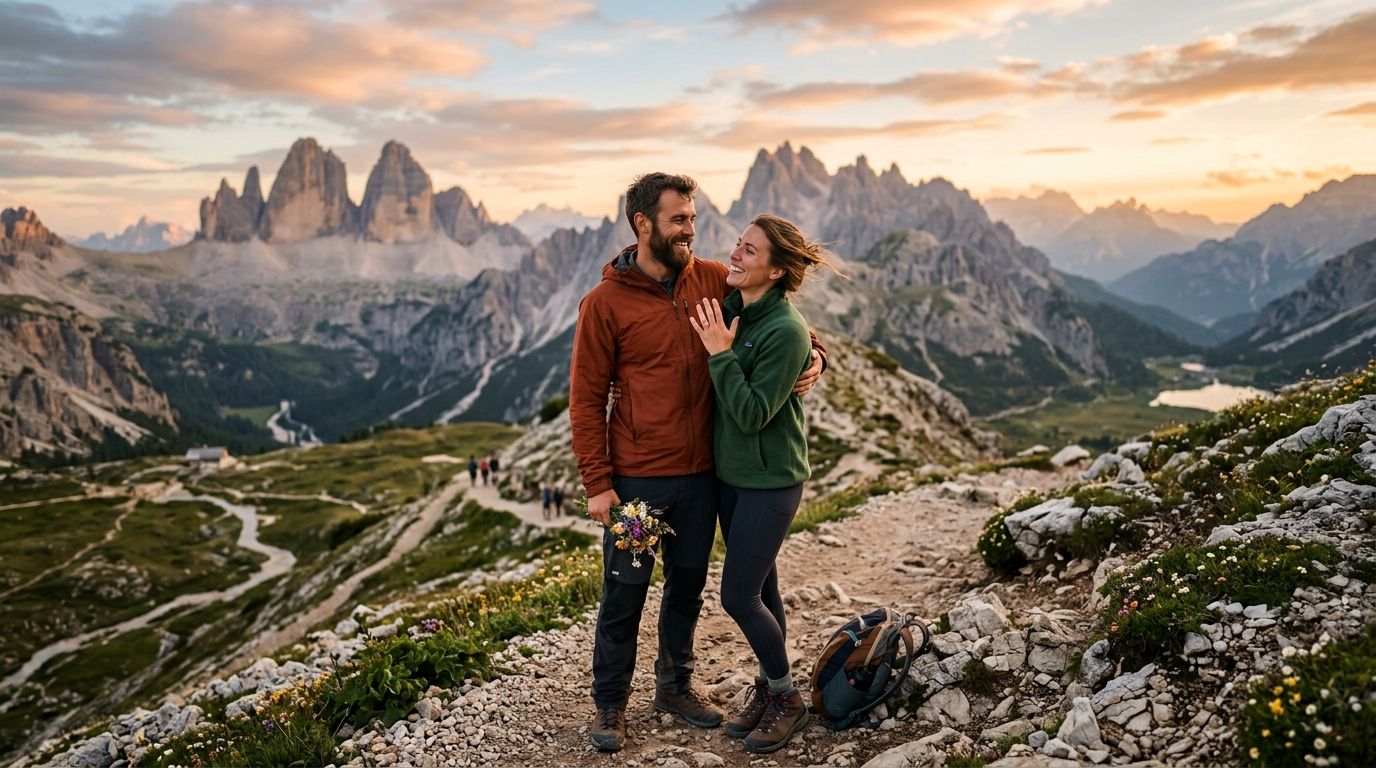
Hiking engagement photos put a real trail, real elevation and real weather into the frame, which is why they read differently than a backyard or studio session. David Suns Weddings builds hiking engagement sessions around trail length, golden hour timing and the couple's actual fitness level, not a fixed backdrop that looks good in a portfolio but wrecks a first date on the trail.
- Hiking engagement photos work best at sunrise or golden hour on trails under 3 miles round trip.
- David Suns Weddings scouts the trail and checks permit rules before booking any 2026 hiking engagement session.
- Layered, earth-tone outfits with broken-in boots photograph better than dresses and dress shoes on rocky terrain.
- National park photography permits vary by park, so confirm rules at least two weeks before the shoot.
- Pack water, a headlamp and a backup low-elevation spot in case weather or trail conditions change.
Why this matters for hiking couples
A hiking couple isn't booking engagement photography the way a couple choosing a rooftop or coffee shop session does — they're already outdoors people, and they want photos that look like their actual life, not a staged version of it. That changes the brief: trail choice, footwear, pack weight and weather all become creative decisions, not logistics to work around.
Couples who search for hiking engagement photos in 2026 are usually weighing a familiar local trail against a bucket-list destination like a national park, and they want to know how much hike is too much hike before they book anyone. Preparing for an engagement photo session on a trail takes more coordination than a park bench shoot, because timing, terrain and gear all have to line up on the same afternoon.
Scout the trail before you book the date
The single biggest variable in hiking engagement photography is the trail itself — its length, its elevation gain, and whether it allows commercial or semi-commercial photography at all.
- Check trail mileage and elevation gain against both partners' actual hiking experience, not the fitter one's.
- Confirm whether the trail or park requires a photography permit; many national parks and some state parks do.
- Ask about parking capacity and shuttle requirements for popular trailheads, especially on weekends.
- Identify 2-3 stopping points along the route with open sky or a clearing, since dense forest canopy kills usable light fast.
- Have a lower-elevation backup trail ready in case weather closes the primary route.
Time the hike around light, not just mileage
Most couples plan around when they're free, not when the trail actually photographs well, and that's the fastest way to end up with flat, midday light on a beautiful trail.
- Start the hike so you reach the photo point 60-90 minutes before sunset or right at sunrise, when light is soft and directional.
- Build in extra time for elevation gain — a 2-mile trail with 800 feet of climbing takes longer than a flat 2-mile walk.
- Avoid midday sessions between roughly 11am and 3pm when sun is directly overhead and shadows go harsh.
- Check the specific sunset time for the date, since it shifts by weeks across the calendar year.
- Build a 20-30 minute buffer into the timeline for water breaks, wardrobe changes or a slower pace than planned.
Dress in layers that photograph well on a trail
Wardrobe is where most hiking engagement shoots go wrong — couples either overdress like they're at a formal session or underdress like they're on a training hike, and both read badly in photos.
- Choose earth tones, deep greens, rust, denim and cream over bright white or neon athletic wear.
- Layer a jacket or flannel that can come off mid-shoot for wardrobe variety without a full outfit change.
- Wear broken-in hiking boots or trail shoes, never new boots or dress shoes on uneven terrain.
- Pack a small bag for a second layer, lip balm, and blister protection rather than carrying everything by hand.
- Review outfit guidance for outdoor sessions before shopping so the palette works with the trail's actual colors, not just what looks good on a hanger.
Pack light, but pack the right things
A hiking engagement session carries real backcountry risk if the couple treats it like a walk in the park, and a photographer who doesn't plan for it either is a liability, not a convenience.
- Carry at least one liter of water per person for anything over a mile round trip.
- Bring a small first-aid kit, especially if the trail has loose rock or stream crossings.
- Pack a headlamp if the shoot runs into dusk, since trails get genuinely dark within minutes after sunset.
- Check cell signal along the route in advance — many trailheads and canyons have none.
- Confirm whether dogs are welcome on the trail before planning a pet-inclusive shoot around one.
Build a shot list that respects the trail
A rigid, studio-style shot list doesn't survive contact with a real trail — wind, mud, and changing light all force adjustments, so the list needs to be a set of moments, not exact poses.
- Plan for wide establishing shots that show the landscape, not just the couple.
- Plan for a few close, candid moments during actual movement — walking, laughing, catching a breath at a viewpoint.
- Plan one posed portrait set at the best light point of the hike, not the start.
- Leave room to improvise around unplanned finds — a fallen log, a stream crossing, an overlook that wasn't on the map.
- Keep the list to 5-6 core moments; more than that turns a hike into a photo shoot with hiking attached.
Plan for weather, elevation and safety
Weather changes fast at elevation, and a session planned around a clear forecast can turn into fog, wind or an early sunset with almost no warning.
- Check both the trailhead forecast and the summit or high-point forecast separately — they're often different.
- Have a rain or fog contingency location at lower elevation ready to go same-day.
- Watch for afternoon thunderstorm patterns common in mountain regions during summer months.
- Build in a turnaround time so the couple isn't descending a trail in the dark.
- Confirm what happens to the booking if the session gets rescheduled for weather, before the shoot day arrives.
Plan your hiking engagement session
Talk through trail options, timing and permits before you book.
Comparing hiking session formats
| Format | Best for | Key limitation |
|---|---|---|
| Local trail, sunrise or sunset | Couples who want easy logistics and no permit hassle | Familiar scenery may look like every other local shoot |
| National or state park day hike | Couples who want dramatic, varied landscape in one session | Photography permits and parking limits often apply |
| Multi-mile summit trek | Couples who are experienced hikers wanting a bucket-list result | Long timeline, weather-dependent, higher risk of a scrapped shoot |
| Winter or snow trail session | Couples drawn to a quieter, high-contrast look | Cold slows everyone down and shortens the usable shoot window |
Each format has a real tradeoff — the local sunrise trail wins on reliability, the national park day hike wins on visual variety, and the summit trek wins on drama but carries the most risk of a weather-forced reschedule.
Common mistakes hiking couples make
- Choosing mileage over light. A 5-mile trail with harsh midday sun photographs worse than a 1-mile trail at golden hour.
- Skipping the permit check. Some national parks fine or turn away photographers without the right permit, even for a small engagement shoot.
- Wearing new boots. Blisters two miles in end a session early more often than weather does.
- Overpacking the shot list. Trying to hit ten poses on a moving trail slows the hike and flattens the energy of the photos.
- Ignoring the descent. Couples plan the hike up but forget the walk back takes just as long, often in fading light.
FAQ
What's the best time of day for hiking engagement photos?
Sunrise or the 60-90 minutes before sunset give the softest, most directional light for hiking engagement photos. Midday light between roughly 11am and 3pm creates harsh shadows on trails with little tree cover.
Do you need a permit for engagement photos in a national park?
Many national and state parks require a photography permit for anything beyond casual personal photos, and rules vary by park. Confirm permit requirements at least two weeks before the planned session date.
How long should a hiking engagement trail be?
A round-trip distance of about 3 miles or less keeps the session manageable for most couples and photography gear. Longer trails work for experienced hikers but add real weather and daylight risk.
What should you wear for a hiking engagement session?
Earth tones, layered jackets and broken-in hiking boots photograph better than bright athletic wear or new shoes. A light pack for water and a spare layer keeps hands free for the actual hike.
Can you bring a dog on a hiking engagement shoot?
Yes, if the trail allows pets, but confirm the trail's pet policy before planning the shoot around one. Not every national park trail permits dogs, even on leash.
Is a national park or a local trail better for engagement photos?
A local trail offers easier logistics and no permit requirement, while a national park delivers more dramatic, varied scenery. The right choice depends on how much planning time and travel the couple wants to invest.
What happens if it rains on the hiking session day?
A backup lower-elevation location or a rescheduled date is standard practice for weather-dependent hiking sessions. Confirm the rescheduling policy with the photographer before booking.
How much daylight buffer should you plan for elevation gain?
Add extra time beyond flat-trail pace for any trail with meaningful elevation gain, since climbing slows most couples down. A 20-30 minute buffer keeps the group from descending in the dark.
One last thing
The detail most couples skip is the walk back down — everyone plans the ascent and the photo point, then forgets the descent eats just as much daylight, and a trail that felt bright at 6pm can be nearly dark by 6:45 in shoulder-season months. Build the return hike into the timeline before booking, not after.


