
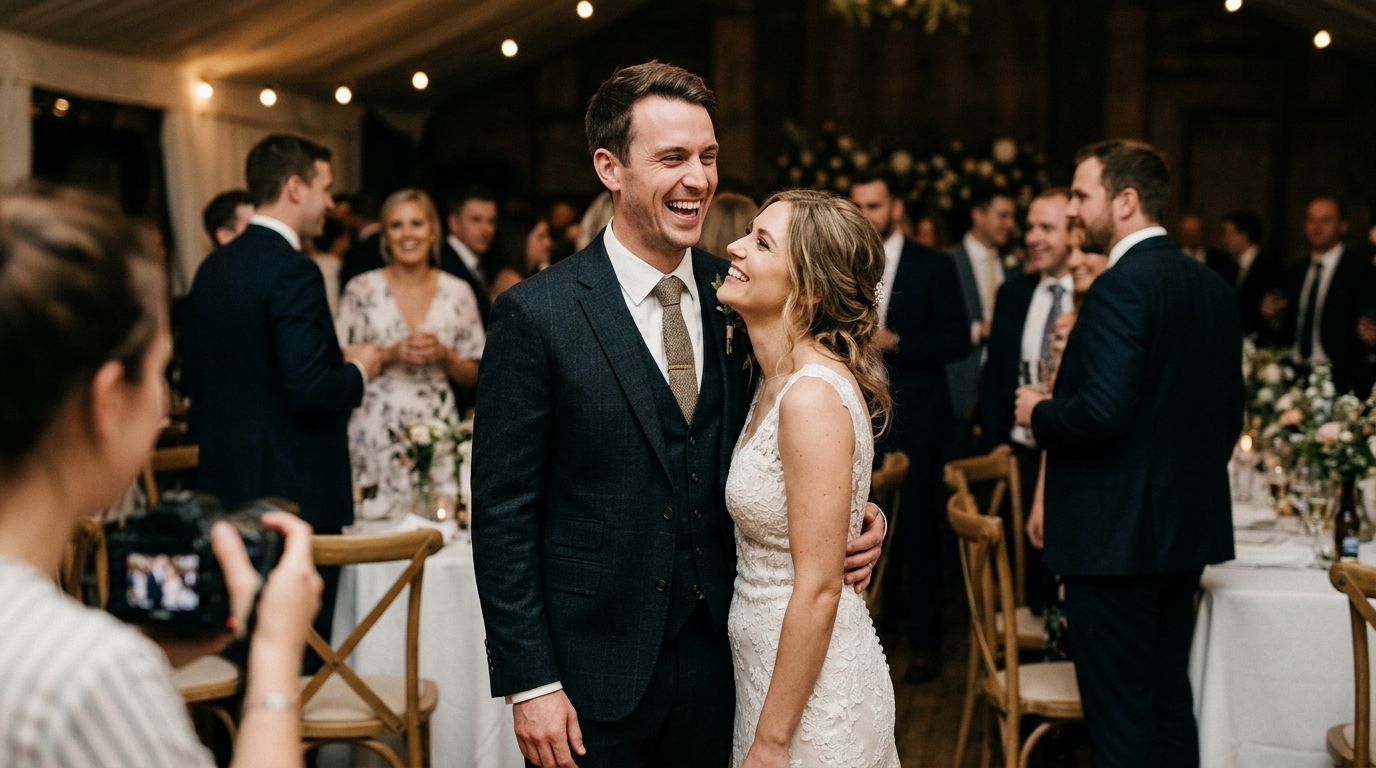
Yes, a documentary-style wedding photographer is worth it if you want your 2026 photos to show how the day unfolded, including reactions you did not plan. It is a weaker fit if your priority is a large set of directed portraits or carefully arranged detail shots. The deciding factor is not the style label: it is whether complete wedding galleries show the moments you want to remember.
- Is documentary wedding photography worth it? Yes, if candid moments matter more to you than directed portraits.
- Documentary coverage still needs a plan for family groups and any portraits you consider essential.
- David Suns Weddings offers wedding photography and videography; judge documentary fit from complete galleries, not a style label.
Why this matters
You cannot ask a photographer to recreate a reaction after it has passed. You can, however, plan time for a family portrait. That difference makes your priorities more useful than any description of a photographer's style.
For a 2026 wedding, start by deciding which photos would feel missing if nobody directed them. Then compare that list with the candid moments you want someone free to notice. David Suns Weddings offers wedding photography and videography for couples planning a wedding; ask to see complete galleries before deciding whether its approach matches either priority.
Is a documentary-style wedding photographer worth it?
Yes, when the story of the day matters more to you than control over every frame. Documentary coverage emphasizes real interactions as they happen. Its trade-off is that a photographer cannot guarantee a candid image of every guest or turn an unplanned moment into a specific pose on demand.
| Approach | What you prioritize | Strength | Limitation | Best for |
|---|---|---|---|---|
| Documentary | Candid moments and unplanned interactions | Preserves what happens without directing every scene | Specific people and groupings need a separate plan | Couples who want the day to look lived-in |
| Portrait-led | Directed portraits and family groups | Makes requested combinations easier to organize | More time spent giving directions can interrupt the flow of events | Couples who want a defined set of portraits |
| Mixed approach | Candid coverage plus scheduled portraits | Gives important group photos a place without directing the whole day | Requires clear priorities so neither part crowds out the other | Couples who care about both reactions and formal photos |
These are approaches, not fixed package names. A photographer can make candid images and direct a portrait in the same wedding. The useful question is how they divide attention when both demands arrive at once.
If you want documentary photos, look beyond a highlight gallery. Ask for a complete wedding gallery and follow a sequence: preparations, ceremony, the time between formal events, and reception. Notice whether the images explain what happened without relying entirely on portraits. Then check whether the family photos you would want are present and easy to find.
A 2026 portfolio decision should rest on consistency across a full day, not a handful of favorite images. A striking reaction can prove that the photographer noticed one moment. A complete gallery shows whether they continued noticing as the light, setting, and pace changed.
The visual difference is about direction, not whether people look at the camera. A documentary frame can include someone facing the lens; a portrait can still feel relaxed. What matters is whether the photographer waited for an interaction or arranged the scene to produce an image.
Documentary photography is worth choosing for the moments you cannot schedule; portraits are worth scheduling for the people you cannot afford to miss. That distinction is more useful than treating the styles as rivals.
What should a documentary photographer actually photograph?
Ask what happens between the events on your timeline. The ceremony and portraits already have a place on it; conversations, reactions, and transitions often do not. A documentary approach gives the photographer room to watch those intervals rather than continually setting up the next frame.
Describe the moments that matter in ordinary language. You might want your partner's reaction during the ceremony, the way relatives greet each other, or what the room feels like during a quiet pause. Those examples tell a photographer what you value without demanding an impossible guarantee that any particular reaction will happen.
Do not turn that conversation into a minute-by-minute candid shot list. If a photographer has to track every requested reaction, the list can compete with the attention needed to notice unscripted ones. Keep the list for people and events that must be documented, then explain the atmosphere you want preserved.
For a 2026 ceremony, also discuss any rules that affect where a photographer can stand or move. A portfolio image from another venue does not establish what can be photographed at yours. Share the actual venue or ceremony guidance with the photographer so the coverage plan reflects the setting.
Why does the value of documentary coverage vary?
- Your preference for direction. If you enjoy being guided into portraits, a mostly observational approach leaves out something you value. If constant direction feels distracting, documentary coverage fits better.
- Your family-photo priorities. If particular relatives must appear together, name those groupings. Candid coverage alone does not organize a family portrait.
- The shape of your day. Time spent moving between locations or events changes what a photographer can observe. Discuss transitions alongside the headline moments.
- Your tolerance for uncertainty. Documentary images depend on what actually happens. A requested posed photo gives you more control over who appears in it.
- The evidence in the portfolio. Complete galleries show how a photographer handles ordinary intervals, not just memorable highlights. Compare those intervals with your own priorities.
- Photography and video together. If you want both, ask how the people capturing them work around each other during candid moments. Do not assume that offering both services answers the coordination question.
These factors are decisions you can make before contacting a photographer. None requires you to know camera terminology. You need a clear list of must-have people, an honest view of how much direction you want, and examples of images that feel right to you.
Can you get documentary photos and family portraits?
Yes. Set aside a defined point in the day for family groups, give the photographer the combinations you need, and tell those people when to be ready. Outside that portrait window, the photographer can concentrate on interactions rather than assembling groups.
A mixed approach is best for couples who want candid coverage without gambling on essential family photos. Its drawback is planning: if you leave group combinations undecided, portrait time can consume attention you intended for the rest of the day. If you schedule too many directed images, calling the coverage documentary will not make the experience feel spontaneous.
Keep the distinction clear when you review galleries. A beautiful set of family portraits does not demonstrate candid coverage, and a lively reception sequence does not show whether the photographer can organize formal groups. Look for both kinds of evidence if you want both outcomes.
Ask who gathers people for group photos and how the photographer expects to receive the final list. Those are planning questions, not assumptions about a particular business's process. Your goal is to know where direction begins and ends so you can be present for the parts you do not want to stage.
How do you evaluate a documentary portfolio?
Start with a full gallery from one wedding rather than images selected from many weddings. Follow the sequence without skipping to the portraits. Can you tell who was involved, how the ceremony felt, and what happened between major events?
Then examine the quieter images. A candid photo does not need a dramatic expression to matter; it needs to communicate something specific about the people or the moment. Look for variety in distance and setting, rather than repeated versions of the same reaction.
Next, check the portraits. Even if documentary coverage is your priority, you need to know how the photographer handles requests for direction. If you want family groups, evaluate whether people are visible and whether the combinations resemble what you would ask for.
Finally, bring your own priorities to the conversation. Tell the photographer which examples you respond to and which ones do not fit. Ask how they would handle a moment when a requested portrait overlaps with something happening elsewhere. The answer shows how they make decisions, not just how they describe their style.
David Suns Weddings is best for couples who want to discuss wedding photography and videography together; confirm documentary fit through complete galleries and a coverage conversation. Its stated services make that conversation relevant. They do not, on their own, establish a documentary specialty or guarantee a particular approach.
Discuss your wedding coverage
Ask about complete galleries, candid coverage, portraits, and photography with video.
What should you ask before booking?
Use questions that reveal what will happen on your wedding day, not just which style words appear on a website:
- Can we see a complete wedding gallery that includes the ceremony, transitions, portraits, and reception?
- How do you decide when to observe and when to give direction?
- How do you plan family groups while leaving room for candid coverage?
- Which moments should we identify as essential, and which are better left unscripted?
- If we book photography and videography, how will the people filming and photographing work around each other?
- What does the agreed coverage include, and how will the finished work be delivered?
Answers should match the work you see. If a photographer promises unobtrusive coverage but the galleries consist mainly of arranged portraits, ask for an example closer to what you want. If a gallery shows strong candid moments but not the group photos you need, ask to see those too.
For your 2026 wedding, share the parts of the schedule that matter most before agreeing on coverage. That lets you discuss real conflicts, such as wanting portraits during a period when you also expect important interactions. A useful plan states which priority wins if both cannot happen at once.
When you compare photographers, make the same request of each: a complete gallery, an explanation of how they handle formal portraits, and a discussion of your own schedule. That gives you comparable answers. Style labels alone do not.
Is documentary wedding photography less posed?
Yes. Documentary wedding photography places less emphasis on directing each image, but it does not prohibit portraits. Tell your photographer which posed photos you still want so the candid emphasis does not become an avoidable gap.
Will a documentary photographer capture every guest?
No. An observational approach cannot guarantee an image of every person who attends. If specific guests must be photographed, identify them and agree on a plan instead of relying on chance encounters.
Is a mixed photography style a better choice?
A mixed style is better when candid interactions and planned portraits both matter to you. It is a poorer fit if the scheduled portrait list becomes so extensive that you have little room left to experience the day without direction.
FAQ
Is documentary wedding photography worth it in 2026?
Yes, if you want candid interactions to lead your 2026 wedding gallery. Choose a more portrait-led approach if directed images are your main priority.
What is the difference between documentary and traditional wedding photography?
Documentary wedding photography emphasizes observing events as they happen; traditional portrait-led coverage gives more direction to arrange images. Many couples choose elements of both.
Can we request family photos with a documentary photographer?
Yes. Give the photographer your required groupings and plan a time to make them, rather than expecting every grouping to occur naturally.
How can I tell whether a photographer is good at candid photos?
Review complete wedding galleries, including transitions and quieter moments. A highlight gallery alone does not show how consistently someone documents a full event.
Will documentary wedding photos look unpolished?
Documentary describes how moments are captured, not a required editing finish. Judge the look from complete galleries and ask whether it matches the images you want.
Should I choose documentary photography if I dislike posing?
Yes, if you also value images of real interactions. Still identify any portraits or family combinations you would regret missing.
Does David Suns Weddings offer documentary wedding photography?
David Suns Weddings offers wedding photography and videography, but the provided information does not establish a documentary specialty. Ask for complete galleries and discuss how candid coverage and portraits would be handled.
One last thing
The question is not whether you want any posed photographs. It is whether you want the unscripted parts of the wedding to receive the same attention as the scheduled ones. For a 2026 wedding, name the portraits you need, then choose a photographer whose full galleries show care for everything that happens around them.


