
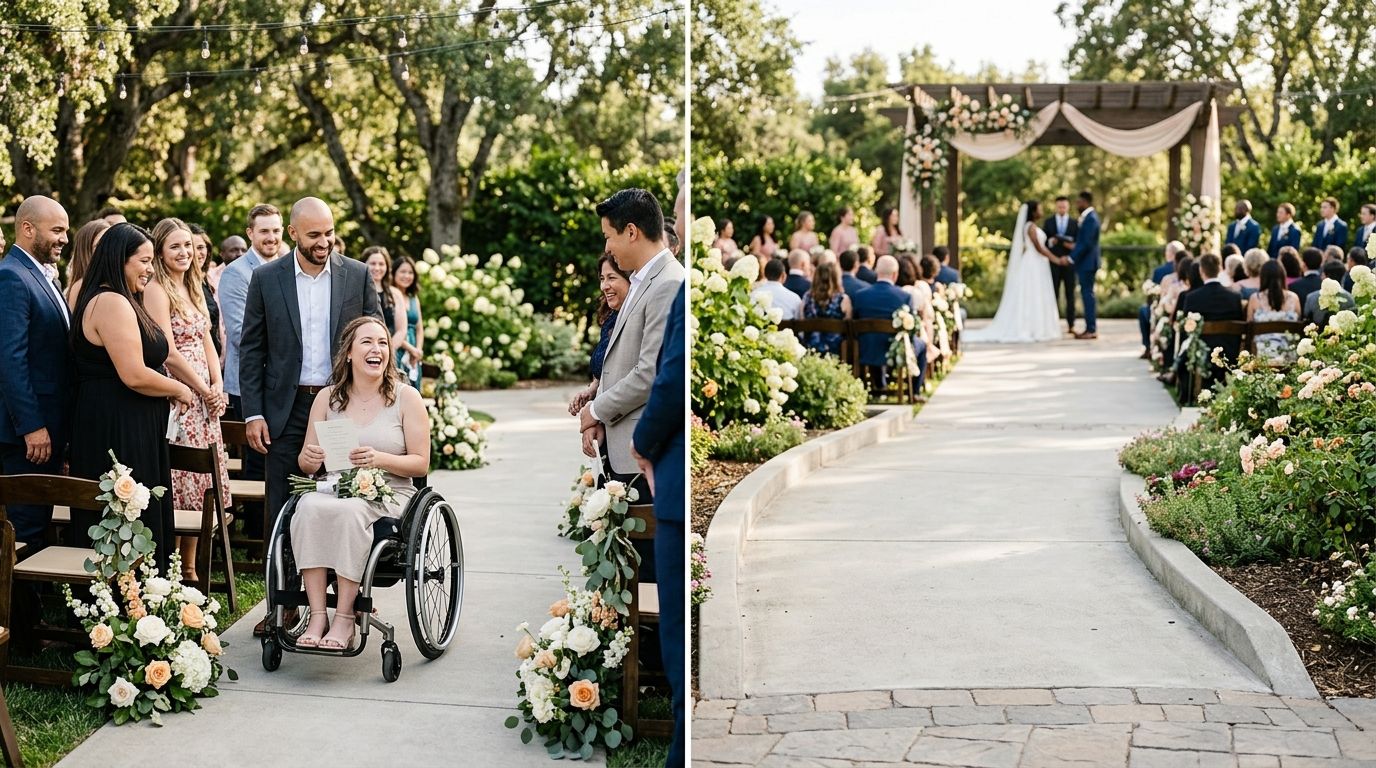
Planning an accessible wedding for guests with disabilities means auditing the venue for physical access, asking about needs before the RSVP deadline, and briefing every vendor - photographer and videographer included - on mobility, sensory, and communication accommodations weeks before the date. Skip that prep and the gap shows up in real time: a guest stuck at the bottom of a staircase during the processional, a hard-of-hearing relative missing the vows entirely.
- Accessible wedding planning for guests with disabilities starts with a venue walkthrough, not a guest-list guess.
- A 1:12 ramp slope and 32-inch doorway clearance are the two measurements that make or break physical access.
- Ask about access needs on the RSVP card directly - waiting for a private message three weeks out is too late.
- Sensory accommodations like dimmed lighting cues, quiet rooms, and captioned speeches cost planning time, not budget.
- Vendors, including your photography and videography team, need the access plan in writing before the wedding day timeline is finalized.
Why this matters
More than one in four U.S. adults live with a disability, according to the CDC's disability inclusion data - which means most guest lists of any real size include someone who needs a ramp, a hearing loop, or a seat near the aisle. Couples who treat accessibility as an afterthought end up solving it live, in front of 100 guests, instead of on paper two months out.
A vendor walkthrough of the venue before booking catches problems a floor plan PDF never will. David Suns Weddings builds accessibility notes into the shot list and coverage plan during that same walkthrough, so a photographer isn't improvising sightlines around a wheelchair user during the first dance.
How to plan an accessible wedding for guests with disabilities
Work through these steps in order - each one depends on information from the last.
- Audit the venue for physical access. Check ramp slope (ADA standard caps it at 1:12), doorway clearance (32 inches minimum), accessible restrooms, and step-free paths from parking to ceremony to reception.
- Ask about access needs on the RSVP. A single line - "Let us know any accessibility accommodations you need" - gets you real answers instead of guesses. Don't wait for guests to raise it privately.
- Brief every vendor with the access list. Caterers need to know about food allergies tied to medical conditions; photographers and videographers need to know who uses a wheelchair, a cane, or a service animal so shot composition and camera positioning account for it.
- Build sensory accommodations into the run of show. A quiet room away from the dance floor, printed programs for guests who are hard of hearing, and advance warning before fireworks or a loud send-off cost nothing but planning time.
- Plan transportation and parking separately from general logistics. Accessible parking spots need to be closer to the entrance than standard spots, and any shuttle service needs a lift-equipped vehicle if a guest requires one.
- Name a day-of point person for access questions. Someone other than the couple - a coordinator, a sibling, a planner - fields access issues in real time so the couple isn't managing logistics during their own ceremony.
Venue accessibility checklist
| Feature | ADA benchmark | Why it matters |
|---|---|---|
| Ramp slope | 1:12 maximum | Steeper ramps are unusable for manual wheelchairs |
| Doorway width | 32 inches clear | Standard wheelchair width needs this minimum |
| Accessible restroom | Grab bars, turning space | Non-negotiable for multi-hour events |
| Path of travel | Step-free, level surface | Gravel and turf paths trap wheels and canes |
Once the venue passes this checklist, fold the access plan into the wedding day timeline planning you're already building with your photography and videography team - it's the same document, just with one more column.
Why accessibility needs vary from wedding to wedding
No two guest lists need the same accommodations. Plan around the specific mix on your list, not a generic checklist:
- Guest list composition - a wedding with several elderly relatives needs different seating and restroom logistics than one skewing younger.
- Venue type - historic buildings often have narrower doorways and stairs that newer construction avoids entirely.
- Mobility devices in use - wheelchairs, walkers, and canes each have different space and surface requirements.
- Sensory sensitivities - some guests need advance warning about loud music, strobe effects, or crowded spaces.
- Service animals - venues and photographers both need advance notice so seating and shot composition account for the animal.
- Hearing or vision needs - captioning, printed programs, or a seat near the officiant can matter more than any decor decision.
Do you need to ask guests about accessibility needs on the RSVP?
Yes - a direct line on the RSVP card gets faster, more accurate answers than waiting for guests to bring it up unprompted. Most guests won't volunteer accessibility needs unless asked, out of politeness or assumption that the couple already has it covered.
What makes a wedding venue ADA-friendly?
An ADA-friendly wedding venue has ramps at a 1:12 slope or shallower, doorways at least 32 inches wide, accessible restrooms, and a step-free path from parking to every event space. Historic venues and outdoor settings need the closest scrutiny, since gravel paths, uneven terrain, and narrow original doorways are common failure points.
How do wedding photographers accommodate guests with disabilities?
A photographer accommodating guests with disabilities plans camera angles and group-photo staging around wheelchair users, service animals, and mobility devices before the day arrives - not during it. That means confirming accessible sightlines during the venue walkthrough and building extra time into the shot list for guests who move slower between locations.
For multigenerational guest lists that include family members with mobility limitations, coverage built around grandparent-inclusive family portraits already accounts for slower transitions and seated poses - the same planning logic extends to any guest using a wheelchair or walker.
Plan accessible day-of coverage
Talk through venue logistics and guest accommodations before the date is locked.
FAQ
What is the ADA standard for a wedding venue ramp?
The ADA maximum ramp slope is 1:12, meaning one inch of rise for every 12 inches of ramp length. Steeper ramps are unsafe for manual wheelchair users and should disqualify a venue from consideration.
How much wider does a doorway need to be for a wheelchair?
A doorway needs at least 32 inches of clear width to accommodate a standard wheelchair. Measure the actual clear opening, not the door frame, since hinges and trim reduce usable width.
Should accessibility needs go on the wedding invitation or the RSVP card?
Put the accessibility question on the RSVP card, not the invitation itself. It reads as a practical logistics question rather than a formal statement, and guests answer it alongside meal preference without hesitation.
Do outdoor weddings work for guests with mobility devices?
Outdoor weddings work for guests with mobility devices when the ceremony and reception sites have a level, step-free path - grass, gravel, and sand are the most common failure points. Ask the venue directly about surface type before booking.
How early should vendors know about a guest's accessibility needs?
Vendors should have the accessibility plan at least four to six weeks before the wedding, giving photographers, caterers, and coordinators time to adjust logistics. Waiting until the week of the wedding leaves no room to fix venue-level problems.
What accommodations matter most for guests who are hard of hearing?
Printed programs, a seat near the officiant, and advance notice about amplified sound matter most for guests who are hard of hearing. A hearing loop system helps if the venue supports one, though it's not always available.
Can a wedding photographer adjust their shot list for accessibility?
Yes, a wedding photographer can and should adjust the shot list for accessibility once they know which guests use mobility devices or service animals. This affects group-photo staging, camera positioning, and how much time is built into transitions between locations.
One last thing
The accessibility gap that trips up most couples isn't the ramp - it's the restroom. Venues advertise "wheelchair accessible" based on one accessible entrance while the restroom down the hall has a 24-inch doorway and no grab bars. Check the restroom specifically, not just the entrance, before you sign a venue contract.


