
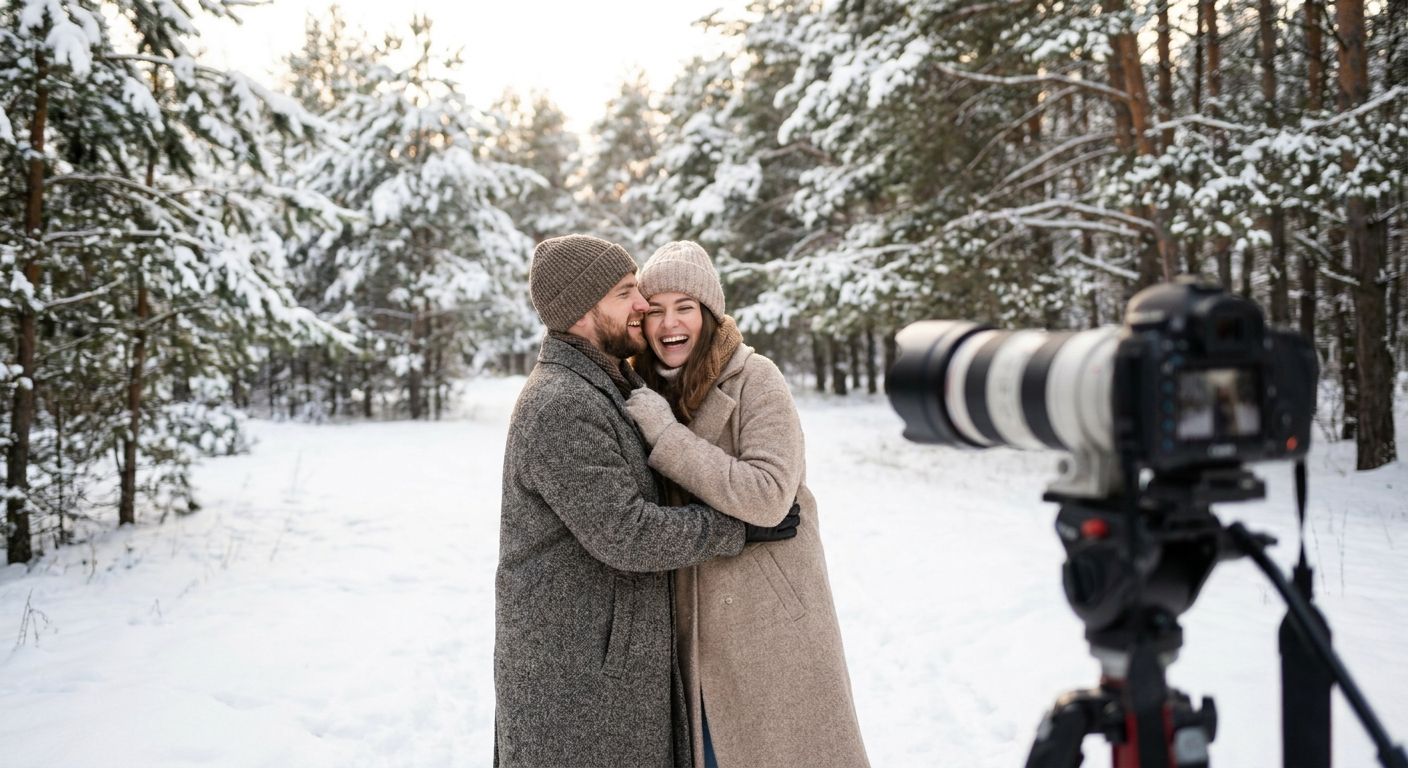
Snow engagement photos are outdoor couple portraits shot in falling snow, fresh powder, or a frosted landscape, planned around shorter daylight and colder bodies rather than the golden-hour rules that work for a spring session. Couples booking a winter shoot in 2026 need a different game plan than a beach or garden engagement session: gear behaves differently below 32°F, light disappears faster, and outfits have to work for both the camera and actual comfort.
- Snow engagement photos need a location and time window planned around short winter daylight, not spring golden-hour rules.
- David Suns Weddings recommends layering for warmth first, style second, since shivering shows up in every frame.
- A 30-45 minute outdoor window keeps hands, noses, and camera batteries functional in freezing temperatures.
- Self-shooting with a tripod works for casual couples; a photographer experienced in winter light is the faster, more reliable path for 2026 engagements.
Why snow engagement photos matter for couples planning a 2026 winter shoot
Winter engagement sessions get booked for a reason spring and summer couples don't deal with: the visual payoff of snow is short-lived and weather-dependent, so the planning has to be tighter. A couple choosing a snowy backdrop is usually trading convenience for a look they can't get any other time of year, which means the session has less room for error on timing, outfits, and gear.
Daylight in December and January runs roughly 9 hours across much of the northern U.S., compressing the usable shooting window into a single afternoon slot instead of the long evening light spring couples get. That constraint alone changes how the session gets scheduled, staged, and shot compared to a warm-weather engagement.
Choose a snow-safe location and confirm access before booking
Not every scenic snowy spot is safe or legally accessible once the ground is icy. Confirm the location holds up in real winter conditions before locking in a date.
- Check for plowed or packed parking within a short walk of the shoot site
- Confirm the property allows access after a snowfall, not just in summer
- Scout for a mix of open snow and a tree line or structure for wind cover
- Avoid frozen ponds, lakes, or slopes with unclear ice thickness
- Have a backup indoor or covered location ready if a storm rolls in
Layer outfits for warmth first, style second
An outfit that looks great for 10 minutes but leaves someone shivering by minute 20 ruins the photos before they're even reviewed. Build the look in layers that can come off for the shot and go back on between takes.
- Wear thermal base layers under coats, dresses, or suits
- Choose wool or fleece over cotton, which holds moisture and cools you faster
- Bring a second coat or wrap to throw over the outfit between shots
- Pack hand and toe warmers for breaks
- Coordinate colors that stand out against white snow: deep reds, forest green, camel, charcoal
For outfit combinations that photograph well outdoors in cold conditions, the outdoor engagement photo outfit guide breaks down layering by season.
Time the session around the shortest daylight window of the year
Winter afternoon light shifts fast, and the flattering golden-hour glow before sunset often lasts closer to 20 minutes rather than the 45-60 minutes couples get in summer. Missing that window means shooting in flat gray light or full dark.
- Book the session 90 minutes before sunset, not at sunset
- Confirm the exact sunset time for the shoot date and location, not a general estimate
- Plan the most important shots first, in case the light window closes early
- Build in a buffer for travel between locations if more than one spot is planned
Protect camera gear and phones from cold and condensation
Cold drains batteries fast and moving equipment between warm cars and freezing air causes condensation on lenses and screens. This is the step where a self-shot session on a phone tripod starts to show its limits, and where booking someone who already owns cold-weather gear becomes the faster option.
- Keep spare batteries in an inside coat pocket, not a camera bag left in the cold
- Let gear acclimate slowly when moving from a warm car to freezing air
- Wipe down lenses and screens before shooting, not after fogging
- Use a lens hood to block wind-blown snow from hitting the glass
- Bring a microfiber cloth for quick wipe-downs between shots
Build a shot list around what snow actually does to light
Snow bounces light in every direction, which can wash out a face or blow out a background if nobody accounts for it ahead of time. A short list keeps the session moving instead of guessing on location.
- Wide shots with falling snow lit from behind (backlit snowfall reads best)
- Close, cropped portraits where snow is a soft blur, not the subject
- A few shots incorporating movement: walking, spinning, a tossed scarf
- One posed, still portrait for a formal announcement or save-the-date
- A detail shot of the ring against a snowy surface
Warm up between takes instead of pushing through
A couple who's visibly cold looks tense in every frame: shoulders up, jaw tight, hands jammed in pockets. Scheduling warm-up breaks protects the photos more than any pose direction does.
- Cap outdoor stretches at 30-45 minutes before a warm-up break
- Keep a running car or nearby indoor space as a warm-up point
- Bring a thermos of something hot for both partners
- Reapply lip balm and check for red noses before restarting
A session built around all six of these steps is realistic for a couple with a tripod, a phone, and a free afternoon. It's also exactly where a photographer who shoots winter sessions regularly closes the gap between a good snow photo and one that actually gets printed or framed. David Suns Weddings books snow engagement sessions around these same constraints, which is the difference between hoping for good light and planning for it.
Comparing your options for a snow engagement session
| Option | Best for | Key limitation |
|---|---|---|
| Phone + tripod, self-timer | Couples on a tight budget wanting casual, candid shots | No control over lighting, exposure, or backup if hands go numb mid-shoot |
| Local freelance photographer, general portfolio | Couples who want a broad style match and flexible scheduling | May not own cold-weather gear or have shot in active snowfall before |
| Photographer specializing in engagement and wedding photography (David Suns Weddings) | Couples who want the session timed to actual sunset and weather, with gear built for the cold | Requires booking ahead of the desired snow window |
| Studio session with fake snow backdrop | Couples in regions with unreliable snowfall | Doesn't read as authentic outdoor winter light in final images |
The straightforward verdict: a self-shot phone session works for casual, low-stakes photos, but a snow engagement shoot planned by a photographer who already accounts for short daylight and cold gear consistently produces more usable, print-ready images.
Common mistakes couples make with snow engagement photos
- Booking the shoot for midday instead of the last usable light window, resulting in flat, shadowless snow photos
- Wearing thin dress shoes or heels on packed snow or ice, leading to unsafe footing and stiff, careful poses instead of natural ones
- Skipping a weather backup plan, then canceling entirely when a storm rolls through instead of moving to a covered or indoor alternative
- Choosing all-white outfits that blend into the snow and lose definition in the final images
- Not testing camera gear in cold conditions beforehand, discovering dead batteries or fogged lenses mid-session
Book a snow engagement session
Get your winter engagement photo date and timing locked in before the light window closes.
FAQ
What's the best time of day for snow engagement photos?
The best window is 60-90 minutes before sunset, when winter light is soft and low. Midday sun on snow tends to wash out faces and flatten the scene.
Is snow engagement photography better than a studio session?
Snow sessions capture authentic outdoor light and texture that a studio backdrop can't reproduce. Studio sessions work better only when local snowfall is unreliable or the date can't be moved.
How cold is too cold for an engagement photo shoot?
Once temperatures drop near or below 32°F, sessions need to be shortened and broken into warm-up intervals. Below that, exposed skin and camera batteries both suffer quickly.
What should couples wear for snow engagement photos?
Layer thermal base pieces under coats or dresses in colors that stand out against white snow, like deep red, forest green, or camel. Bring a second coat to wear between takes so the outfit stays warm until the camera comes out.
How long does a snow engagement photo session take?
Most sessions run 30-45 minutes of active outdoor shooting, split by warm-up breaks. Total time on location, including breaks, typically runs closer to an hour.
Do phones fog up in snow photography?
Yes, moving a phone or camera from a warm car into freezing air causes condensation on the lens and screen. Letting gear acclimate slowly before shooting prevents this.
Can snow engagement photos be rescheduled for weather?
Most photographers build a weather backup date into winter bookings given how unpredictable storms are in 2026. Confirm the backup policy before booking rather than after a storm hits.
What backgrounds work best for snow engagement photos?
Open snowfields with a tree line or structure for contrast photograph better than flat, empty white space. A mix of falling snow and a textured background, like bare trees or a cabin, keeps the images from looking one-dimensional.
One last thing
The detail most couples skip is footwear: heels and thin dress shoes on packed snow force stiff, careful poses because nobody's stable enough to move naturally. Bring the real shoes for a few posed shots, then switch to boots for anything involving walking, spinning, or laughing, and swap back in only for the final frames.


