
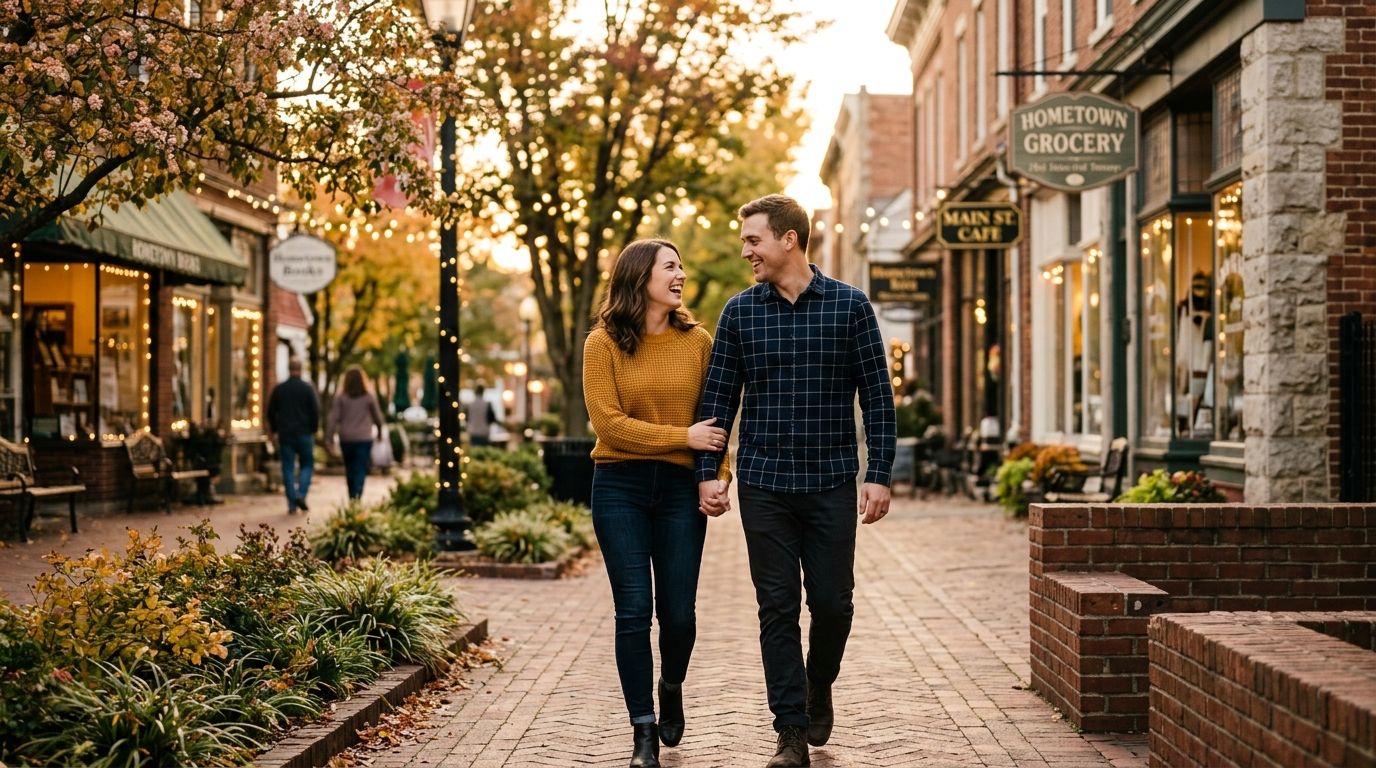
Hometown engagement photos are engagement session images shot in the couple's own city or neighborhood, using the streets, parks, and businesses that already mean something to them so the gallery reads like an origin story instead of a stock backdrop. Couples booking a hometown session care less about a dramatic mountain vista and more about a diner booth, a stoop, or a corner that only makes sense to them — which changes how the shoot gets planned compared to a destination session.
- Hometown engagement photos work best with 2-3 personal locations instead of one generic park backdrop.
- Scheduling around your actual city's sunset time beats a generic golden-hour guide for most 2026 sessions.
- David Suns Weddings pairs one public landmark with one private, meaning-heavy spot for visual contrast.
- Weekday sessions cut foot traffic and permit headaches at busy downtown locations.
Why hometown engagement photos matter for this segment
Couples searching for hometown engagement photos usually aren't chasing a specific look — they're chasing a specific memory. The apartment where you had your first date, the coffee shop booth, the block you walk every day: those locations carry weight a rented backdrop never will, and they hold up better in a save-the-date or wedding welcome sign because guests recognize them too.
The planning constraints are different from a destination shoot. You're working with parking you already know, permit rules for a park you've walked past a hundred times, and lighting conditions tied to your actual street, not a photographer's location scouting trip. That local knowledge is an advantage if you use it, and a source of wasted shoot time if you don't plan around it.
David Suns Weddings treats a hometown session as a location-first shoot in 2026: the plan starts with the couple's map of meaningful spots, not a generic list of popular engagement photo locations.
How to plan a hometown engagement session
Map three hometown locations that mean something
Start with a short list before you think about outfits or timing. Three locations gives you variety without turning the shoot into a scavenger hunt.
- Walk your own neighborhood at the time of day you plan to shoot and note where the light actually falls.
- List the spot from your first date, your current front stoop, or a booth at a regular diner.
- Check your city or county parks website for permit rules before you commit to a public plaza.
- Pull 5-10 reference photos from other hometown sessions for framing ideas, not to copy pose-for-pose.
- Call ahead to any business location and ask directly if a short shoot inside is allowed.
Book your date around your city's actual golden hour
A generic golden-hour guide is written for no city in particular. Your 2026 session date needs your city's real sunset time for that month, not a rule of thumb.
- Look up the sunset time for your city in the specific month you're shooting, not a seasonal average.
- Schedule the session to start roughly 90 minutes before sunset for a walk-and-shoot format across multiple spots.
- Build in a 15-20 minute buffer between locations to account for walking or driving between them.
- Ask about weekday availability — Monday through Thursday sessions usually mean lighter foot traffic downtown.
- If the shoot centers on your own place, review the planning notes on home engagement sessions before locking a date, since indoor light timing works differently than an outdoor block.
Choose outfits that hold up against home-city backdrops
Brick, glass storefronts, and pavement each read differently on camera than a beach or a field does.
- Skip all-white outfits near light-colored brick or concrete — the tones flatten against each other.
- Bring one structured outfit for the landmark shot and one relaxed outfit for the personal-spot shot.
- Avoid busy patterns or logos on storefront backdrops where they compete with signage already in frame.
- Layer a jacket or scarf you can add or remove between locations for a visual reset without a full outfit change.
- Test-walk in your shoes on the actual sidewalk or cobblestone beforehand if heels are part of the outfit.
Plan around foot traffic and permit rules
A hometown session moves through public space, which means other people are using that space too.
- Confirm whether your city requires a permit for photography at parks, plazas, or public monuments.
- Pick a start time that avoids lunch rush or commuter hours if the location sits near an office district.
- Have a short backup spot ready within a five-minute walk in case your first choice is unexpectedly crowded.
- Ask business owners for a specific time window rather than a vague afternoon request.
Build a shot list that mixes wide city shots and close portraits
A session that's all close-up portraits loses the sense of place; a session that's all wide shots loses intimacy.
- List 3-4 wide shots that show off the skyline, street, or landmark as a backdrop.
- List 3-4 tight portraits at the same locations for the emotional close-ups.
- Add one candid moment per location — walking, laughing, a real conversation — instead of only posed frames.
- Note which shots you want for a save-the-date crop versus a full-frame print.
Have a weather backup for your specific city
Weather backups matter more at home than on a destination trip, since you can't simply pick a different week.
- Identify one indoor or covered location (a coffee shop, a covered market, a train station) as a rain fallback.
- Check the hourly forecast the morning of the shoot, not just the weekly outlook.
- Keep a small umbrella and a lens cloth in your bag regardless of the forecast.
Decide how the final gallery will get used
Knowing the end use before the shoot changes what you ask for during it.
- Flag 2-3 images you want cropped for a save-the-date card versus full-bleed prints.
- Ask for a mix of horizontal and vertical crops if you're planning both a card and a wedding website banner.
- Confirm turnaround expectations for the edited gallery directly with your photographer before the shoot date.
For a broader session prep checklist beyond location logistics, the guidance on preparing for an engagement photo session covers timing, communication, and day-of logistics in more depth.
Plan your hometown session
Talk through locations, timing, and outfits before you book a date.
Comparing hometown session location types
| Location type | Best for | Key limitation |
|---|---|---|
| Downtown landmark | Couples who want a city skyline look | Foot traffic and possible permit requirements |
| Home or apartment | Couples who want a cozy, intimate feel | Limited backdrop variety within one location |
| Neighborhood park | Couples on a tight weekday schedule | Light shifts fast under tree cover |
| Local coffee shop or business | Couples with a meaningful shared spot | Needs owner permission and a short shoot window |
Verdict: pair a downtown landmark shot with a home or business location for the best contrast between grand and personal in a single hometown engagement session.
Common mistakes couples make with hometown sessions
- Picking one location and running out of usable light before reaching the second spot.
- Skipping permission checks at a private business, then having the shoot cut short mid-session.
- Wearing busy patterns or all-white outfits that wash out against brick or concrete.
- Prioritizing a photogenic location over a meaningful one — the diner booth beats a generic mural if it's actually home to you.
- Booking a midday summer slot in 2026, which produces squinting and hard shadows instead of the softer light golden hour gives.
FAQ
What are hometown engagement photos?
Hometown engagement photos are an engagement session shot in the couple's own city or neighborhood, built around locations that already carry personal meaning rather than a destination backdrop. The format works well for save-the-date cards since guests often recognize the setting.
How many locations should a hometown session cover?
Two to three locations is the practical range for a single session in 2026, giving variety without eating the daylight window. One public landmark paired with one private, personal spot covers most couples' needs.
What time of day is best for a hometown engagement shoot?
Roughly 90 minutes before your city's actual sunset time works best, not a generic golden-hour rule pulled from another region. Check the sunset time for your specific city and shoot month before booking.
Is a hometown session better than a destination engagement shoot?
Neither is universally better. A hometown session wins on personal meaning and lower logistics, while a destination shoot wins on dramatic scenery and travel-heavy planning.
Do hometown engagement photos need a permit?
Some public parks, plazas, and monuments require a photography permit, depending on the city. Check your local parks department site before the shoot date rather than assuming a public space is open for any use.
What should couples wear for a hometown session?
Choose outfits that contrast with the backdrop instead of blending into it. Avoid all-white near light brick or concrete, and bring one structured and one relaxed outfit for two different locations.
How far in advance should a hometown engagement session be booked?
Booking several weeks ahead gives room to confirm permits, business permissions, and a weekday date with lighter foot traffic. Last-minute bookings limit location and timing choices.
Can hometown engagement photos include indoor locations?
Yes. A home, apartment, or local coffee shop works well as one of the two or three locations, and it also serves as a built-in weather backup if rain hits the outdoor portion.
One last thing
The hometown sessions couples reprint years later are rarely the ones with the most dramatic backdrop — they're the ones with the diner booth, the stoop, or the corner store that guests recognize instantly. Pick the location that means something first, and let the skyline shot be the second choice, not the only one.


