
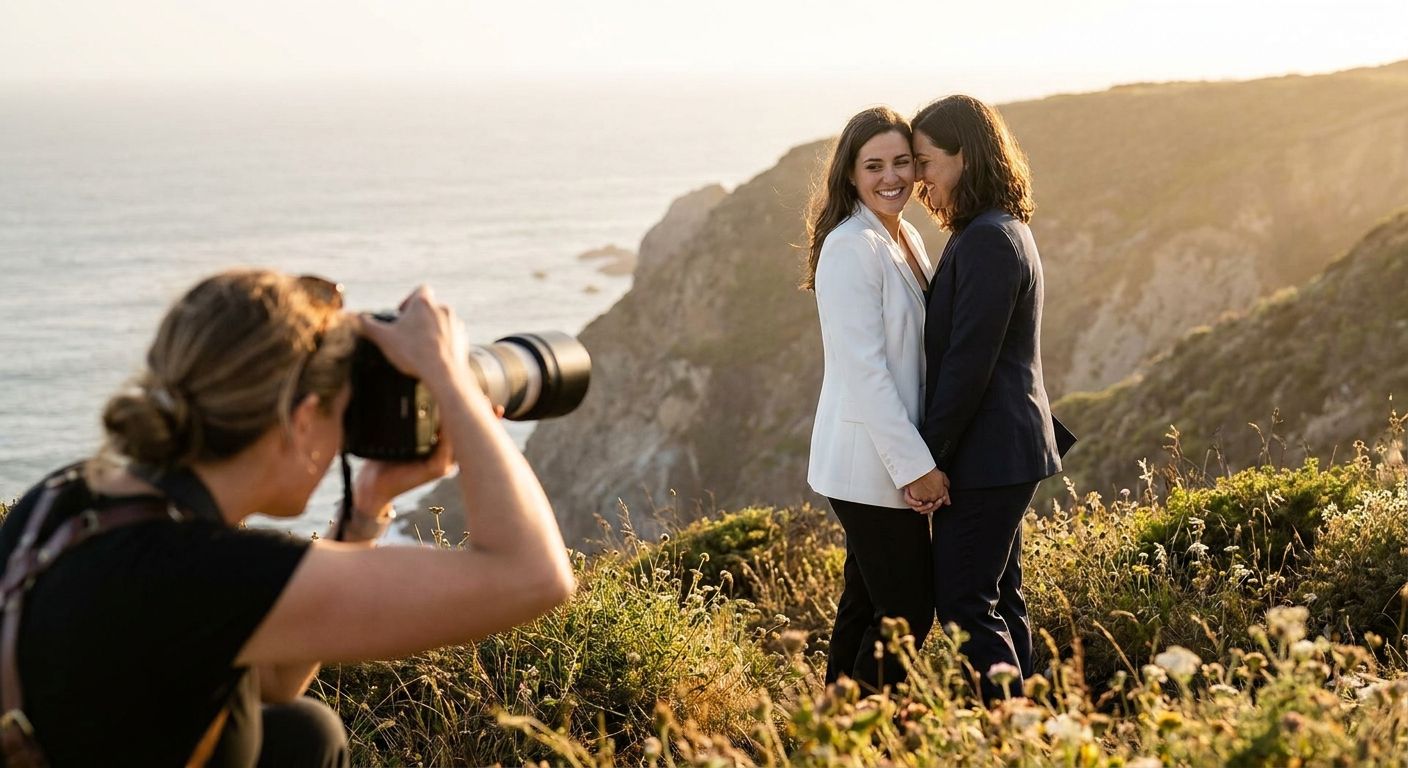
Same-sex elopement photography is the documentation of two people marrying privately, built around a couple who may still be sorting out which state to marry in, which officiant to hire, and which family members get told before or after the ceremony. A same-sex elopement photographer handles the same technical work as any wedding photographer — light, timing, composition — but also needs a shot list that doesn't default to "bride prep" and "groom prep," and a comfort level with two people of the same gender that shows up in how they direct posing, not just what they say in a consultation call.
- A same-sex elopement photographer should show two-groom or two-bride galleries before you book, not just say they're LGBTQ+ friendly.
- Marriage has been legal nationwide since the June 2015 Obergefell v. Hodges ruling, so location choice in 2026 is about scenery and logistics, not legality, in all 50 states.
- David Suns Weddings shoots same-sex elopements and full weddings, and the vetting steps below apply whether you hire this studio or another one.
- Courthouse, national park, and destination elopements each carry different privacy and family-visibility tradeoffs for same-sex couples.
- Booking a videographer alongside a photographer in 2026 costs less as a combined package than hiring two vendors separately for most studios.
Why elopement photography matters for same-sex couples
Marriage equality became federal law in June 2015 under Obergefell v. Hodges, which means location legality is no longer the filter it once was — the filter now is vendor comfort and experience. A photographer who has never posed two men or two women together defaults to heteronormative habits: one partner positioned as the "lead," traditional dip-and-kiss poses built for a height-mismatched couple, first-look staging that assumes a dress reveal.
Elopements strip out the 150-person guest list, which means the photographer's judgment carries more weight per photo — there's no second photographer roaming the reception to catch what the lead misses. For a same-sex elopement photographer, that judgment includes reading family dynamics that can be more complicated than a straight couple's: some guests may be unsupportive, some may be attending as a first show of acceptance, and the photographer needs to document the day without turning tension into the visual story.
Same-sex wedding photography coverage from a studio that already shoots full same-sex weddings is a reasonable proxy for elopement competence — the posing instincts transfer even though the day is shorter.
Vet photographers for real experience, not a friendly tagline
Any photographer can put a rainbow flag in their Instagram bio. Few can show you a full same-sex gallery start to finish.
- Ask to see at least one complete same-sex wedding or elopement gallery, not three curated highlight images
- Check whether their portfolio shows both same-sex male and same-sex female couples, since posing differs between the two
- Ask directly how they'd handle a getting-ready sequence with two grooms or two brides
- Confirm they've shot in the specific setting you want — courthouse, forest, beach — with a same-sex couple before
- Read reviews specifically from LGBTQ+ clients if the photographer's site publishes them
Choose a location that fits the ceremony, not just the legal map
Since nationwide legality removed the old "which states allow this" question, 2026 location decisions come down to logistics: permit rules, crowd exposure, and how public the ceremony feels.
- Courthouse ceremonies are fast, low-cost, and low-privacy — expect other couples and clerks in the background
- National parks require permits for professional photography in most units, and permit lead time can run several weeks
- Waterfall and forest settings offer natural privacy but add hiking logistics for attire and gear
- Beach ceremonies need a tide and wind check the morning of, not the week before
- Backyard or private-property elopements give full control over who's present and who isn't
The elopement photography for courthouse ceremonies format works well for same-sex couples who want a fast, low-drama legal moment before a separate celebration later.
Build a shot list that doesn't assume a gender split
Stock elopement shot lists are written for one partner in a dress and one in a suit. Same-sex couples need a rewritten list.
- Replace "bride getting ready" and "groom getting ready" language with each partner's actual name
- Decide together who walks toward whom, or whether you walk toward each other simultaneously
- Plan ring exchange framing that doesn't put one hand higher than the other by default
- Include a portrait set with both partners as equal subjects, not one posed as accessory to the other
- Note any family members attending so the photographer knows who to include or exclude from formal shots
Plan a timeline without a hidden gender default
Most wedding-day timeline templates assume a first look between a bride and groom on opposite sides of a barn. Same-sex elopements need a timeline built from scratch or adapted carefully.
- Decide if you want a first look at all, and if so, where and how private it needs to be
- Build in buffer time for hair and makeup for both partners if both are getting styled, since templates often allocate more time to one side
- Sequence ceremony, portraits, and any reception-style dinner around actual daylight, not a generic hour count
- Confirm with your officiant whether they've performed same-sex ceremonies before, since script language matters
- Leave 20–30 minutes of unscheduled time for the couple to just be together without a camera pointed at them
Decide on documentary coverage versus styled portraits
Elopements split roughly into two shooting styles, and same-sex couples sometimes want more documentary coverage specifically because they want the day to look and feel unstaged.
- Documentary style captures the day as it happens, minimal direction, more candid emotion
- Styled portrait sessions add posed, editorial-quality images but take more time away from the actual ceremony
- A hybrid approach front-loads documentary coverage during the ceremony and adds 20–30 minutes of styled portraits after
- Ask your photographer which style makes up the majority of their same-sex elopement galleries
- If family attends, decide in advance whether documentary coverage includes their reactions or stays focused on the couple
Handle family visibility and privacy on purpose
Not every same-sex couple wants every image posted publicly, and not every family member wants to appear in a photo shared online.
- Ask the photographer about their default social media and portfolio usage policy before signing
- Request a written note on which images, if any, exclude specific family members
- Decide if you want a public gallery link or a private, password-protected one
- If some guests don't know the couple is marrying yet, flag that explicitly so nothing leaks early
- Confirm turnaround time for the private gallery so you control the reveal timeline
Add video coverage if you want motion, not just stills
Still photography captures composition; video captures vows in the couple's actual voices, which matters more for elopements since there's no larger reception crowd to fill in the emotional record later.
- Ask whether the photographer works with a separate videographer or offers combined packages
- Same-sex wedding videography from a studio already shooting same-sex weddings brings the same posing and timeline fluency to video
- Confirm audio capture for vows specifically, since ambient wind at outdoor elopements can bury quiet voices
- Ask for a short highlight edit turnaround if you plan to share the ceremony before a larger celebration later
- Check whether drone footage is offered for outdoor or national park elopements, and confirm local drone permit rules
Budget for travel if the location isn't local
Elopements to national parks, waterfalls, or out-of-state courthouses add travel costs for the couple and, often, for the photographer.
- Ask upfront whether travel fees are built into the package or billed separately
- Confirm the photographer's availability window if the location requires an overnight stay
- Check permit costs for national park or public land ceremonies before finalizing the location
- Build a backup plan for weather-dependent outdoor locations, since rescheduling on location can add cost
- Ask if the studio has shot in your target location before, which can shorten scouting time on the day
Comparison: elopement formats for same-sex couples
| Option | Best For | Key Limitation |
|---|---|---|
| Courthouse ceremony | Couples who want speed and low cost | Public setting, minimal privacy control |
| National park elopement | Couples who want dramatic natural backdrops | Permit lead time and access restrictions |
| Waterfall or forest ceremony | Couples who want privacy and quiet | Hiking logistics for attire and gear |
| Backyard or private property | Couples who want full guest-list control | Limited scenery variety |
| Beach ceremony | Couples who want an open, airy setting | Weather and tide dependence on the day |
A same-sex elopement photographer worth booking will have a full gallery from at least one two-groom or two-bride wedding, not just a rainbow badge on their homepage.
Check same-sex elopement availability
See open dates and coverage options for 2026 elopements.
Common mistakes same-sex couples make when booking
- Assuming "LGBTQ+ friendly" means experienced — friendly is a baseline, not a portfolio credential; ask for the gallery.
- Skipping the family-visibility conversation — deciding after the fact who appears in public photos causes avoidable conflict.
- Using a heteronormative shot list template — it forces one partner into a default role neither of you agreed to.
- Not confirming permit requirements for national park or public land ceremonies — same-sex couples aren't exempt from the paperwork that applies to anyone shooting there.
- Booking photography and video from two unconnected vendors without a shared timeline — coordination gaps show up as missed moments in the final gallery.
FAQ
Is same-sex marriage legal everywhere in the US in 2026?
Yes. Marriage equality became federal law under the June 2015 Obergefell v. Hodges ruling, and it applies in all 50 states in 2026. Location choice for an elopement now comes down to scenery and permits, not legality.
What should I ask a same-sex elopement photographer before booking?
Ask to see a full gallery from a real same-sex wedding or elopement, not just a few curated images. Also ask how they'd structure a getting-ready sequence and shot list for two grooms or two brides specifically.
Do I need a permit for a national park elopement?
Most national park units require a permit for professional photography, and lead time can run several weeks. Confirm requirements with the specific park before locking in a date.
Is documentary or styled photography better for a same-sex elopement?
Documentary style captures the day candidly with minimal posing, while styled portraits add editorial images but take time from the ceremony itself. Many couples choose a hybrid: documentary during the ceremony, styled portraits after.
Should I hire a videographer for an elopement?
Video captures actual vows in your voices, which matters more at elopements since there's no larger reception crowd to fill in the memory later. Many studios offer combined photo and video packages for elopements.
How do I handle family who don't know I'm eloping yet?
Tell your photographer explicitly which images, if any, should stay out of public galleries or social posts until you're ready to share. A written note in the contract or booking form avoids accidental early reveals.
What's the difference between an elopement and a micro-wedding?
An elopement typically involves just the couple, sometimes with one or two witnesses, while a micro-wedding includes a small guest list, usually under 50 people, with more traditional wedding elements like a reception.
Can I have a first look at a same-sex elopement?
Yes, and it's your choice how to structure it since there's no traditional bride-and-groom template to follow. Some couples walk toward each other simultaneously instead of one waiting for the other.
One last thing
The biggest gap in same-sex elopement photography isn't posing skill — it's the shot list itself. Most templates still assume one partner in a dress and one in a suit, so the single highest-leverage move for 2026 is rewriting the shot list with your photographer by name, not by role, before the day arrives.


