
Yes, you can request an LGBTQ+-experienced wedding photographer. Tell the photography business what experience matters to you, ask to see relevant work, and confirm who will actually photograph your wedding. A welcoming response is a good start, but it does not replace evidence of the assigned photographer’s experience.
- Yes, you can request an LGBTQ wedding photographer with relevant experience and ask to meet the person assigned to your wedding.
- Review complete wedding galleries, not just selected portraits, and discuss how the photographer will handle your preferences.
- David Suns Weddings offers wedding photography and videography; confirm LGBTQ+ experience directly before deciding whether it fits.
Why this matters
Your wedding photos should reflect your relationship, not a photographer’s assumptions about it. That affects the questions they ask before the wedding, how they direct portraits, and which moments they know you want documented.
Ask for experience with the kind of wedding you are planning, not a general promise that everyone is welcome. A photographer can be respectful and still need guidance about your ceremony, family dynamics, or preferred language. You can start with the wedding photography for same-sex weddings guide if you want to turn those priorities into a clearer photography brief.
In 2026, the useful question is not whether a business uses inclusive wording. It is whether the person assigned to your wedding can show relevant work, listen to your preferences, and explain how they will put those preferences into practice.
Can you request an LGBTQ+-experienced wedding photographer?
Yes. Make the request during your first inquiry, then use the conversation to establish what experienced means to you. There is no single credential that answers the question for every couple; a portfolio and a direct conversation reveal more than a label.
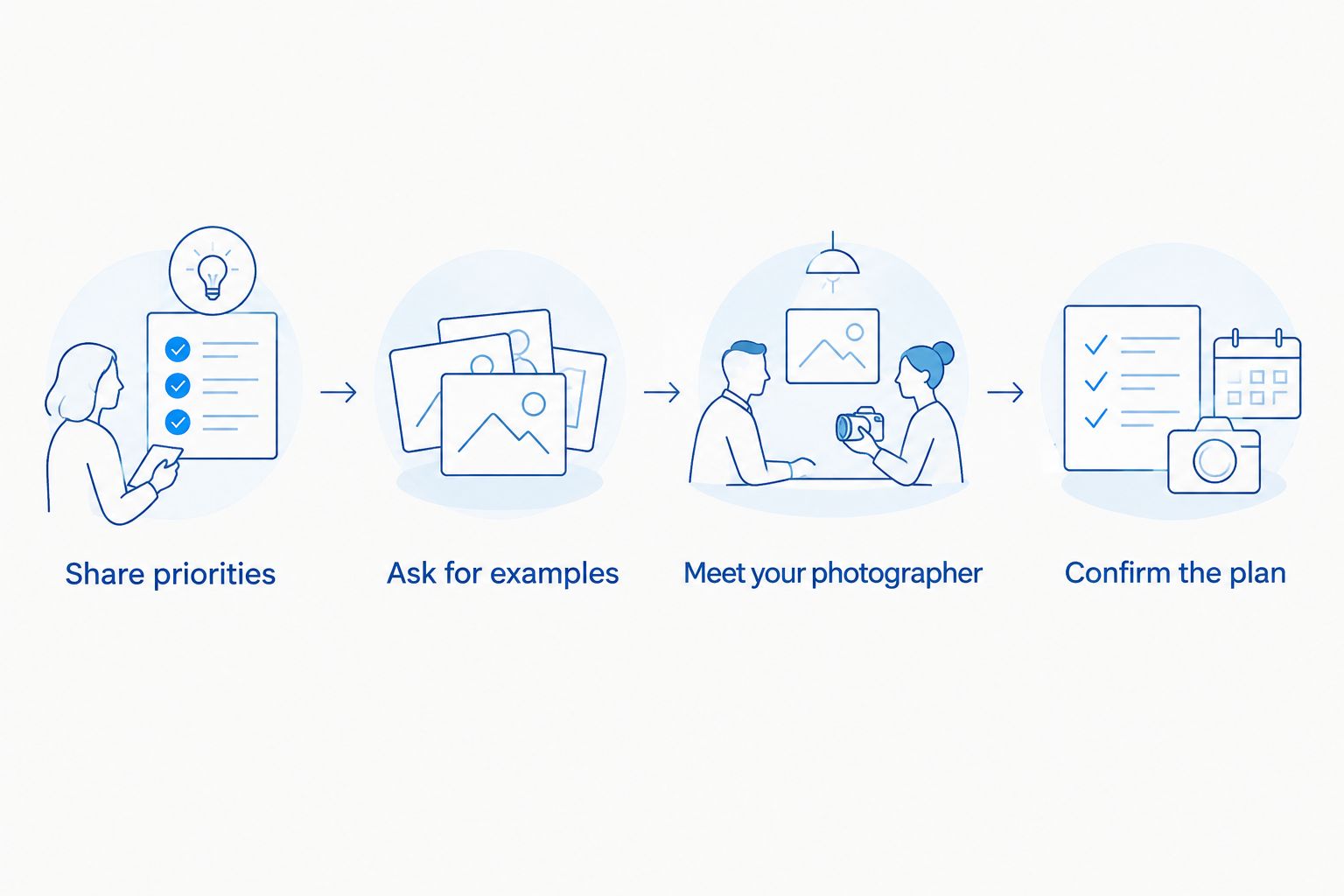
- Share priorities. Say whether you want help planning portraits, documenting a particular ceremony, handling family groupings, or simply working with someone who does not make assumptions about your roles.
- Ask for examples. Request complete galleries from weddings the photographer has permission to share. Look beyond couple portraits to the ceremony, group photos, and unscripted moments.
- Meet your photographer. If you speak with a business rather than an individual photographer, ask who will cover your wedding and discuss your priorities with that person.
- Confirm the plan. Before booking, put your agreed priorities, any important groupings, and any privacy requests into the planning conversation and contract where applicable.
A direct inquiry can be simple: We’re looking for a photographer with experience photographing LGBTQ+ couples. Can you tell us who would photograph our wedding, share relevant work you have permission to show, and talk through how you approach portraits and family photos? You do not have to disclose personal details beyond what helps the photographer plan the work.
The best answer is specific to your wedding. If a photographer cannot explain who will attend, show relevant work they are allowed to share, or discuss your requests without making assumptions, keep looking. A polished selection of portraits alone cannot answer those questions.
What should you ask before booking?
Use your first conversation to test both experience and working style. You are hiring someone to photograph real interactions, including moments you cannot pause and redo. Ask questions that bring the discussion back to observable work and a practical plan.
- Who will photograph our wedding? Meet the person expected to be there. Relevant experience elsewhere in the business does not establish the assigned photographer’s experience.
- Can we see a complete wedding gallery you have permission to share? A full gallery shows how someone documents a ceremony, portraits, family groups, and quieter moments across the event.
- How do you plan couple portraits without assigning gendered roles? Listen for a process that starts with your preferences rather than fixed posing instructions.
- How will you learn the names and language we use? You can provide the terms you want used and ask how the photographer will share them with anyone working alongside them.
- How do you handle sensitive family groupings? Discuss who should be photographed together, which groupings to avoid, and who can answer last-minute questions on the day.
- What happens if the photographer changes? Ask how a replacement would receive the plan and whether you would be able to discuss your priorities with that person.
In 2026, ask these questions before you commit, not during the final wedding-week check-in. You need time to decide whether the answers meet your expectations and to clarify details that matter to you.
Is a welcoming website enough to establish experience?
No. Welcoming language tells you how a business presents itself; it does not tell you who will photograph your wedding or how that person works. Evaluate the assigned photographer through a conversation and work they can share.
| Way to assess a photographer | What it helps you learn | What it cannot establish |
|---|---|---|
| Inclusive website language | Whether the business addresses LGBTQ+ couples | The assigned photographer’s experience or approach |
| Selected portfolio images | The style of photographs the business chooses to show | How a full wedding was covered |
| Complete gallery shared with permission | How one wedding was documented across different moments | Whether your own preferences will be understood |
| Conversation with the assigned photographer | How that person responds to your questions and priorities | How they will work unless the plan is confirmed |
Best for an initial shortlist: website language and selected images. Best for a booking decision: a relevant gallery, a conversation with the assigned photographer, and a confirmed plan. Each has limits; use them together rather than treating any one signal as a guarantee.
DAVID SUNS offers wedding photography and videography for couples planning a wedding. If you are considering David Suns Weddings, ask who would cover your event and request relevant examples; its service description does not establish LGBTQ+ wedding experience.
Why the right photographer varies by couple
LGBTQ+ experience is not a single shot list. The right fit depends on what you want photographed and how you want to work with the person behind the camera. Use these factors to make your request specific:
- Portrait preferences. Decide whether you want directed poses, a less directed approach, or a mix. Tell the photographer what feels natural and what does not.
- Ceremony details. Explain which parts of your ceremony matter most to you so the photographer knows what to discuss when planning coverage.
- Family dynamics. Give clear guidance on group photos if relationships, names, or invitations need careful handling. You decide what is relevant to share.
- Privacy. Tell the photographer whether they can ask to use your images publicly and how you want that conversation handled. Confirm the applicable terms before agreeing to them.
- Photo and video coordination. If you want both, ask how the photographer and videographer would coordinate around the ceremony and portraits. Do not assume one conversation covers both people.
- Your comfort in conversation. Notice whether the photographer listens, asks useful questions, and accepts corrections. You should not have to repeatedly defend a straightforward request.
These factors are not a test you have to pass. They are prompts for choosing what matters to you and checking whether a photographer can work to that brief. In 2026, your clearest request is the one tied to your actual plans.
Can you ask to see LGBTQ+ wedding galleries?
Yes. Ask for galleries the photographer has permission to share, and respect a couple’s decision if their images are private. If no relevant gallery is available, ask the assigned photographer to explain their experience and approach; then decide whether that evidence is enough for you.
Look at more than the headline portraits. Can you see how the photographer documents interactions between the couple, the ceremony, and people close to them? Ask what role the person you are meeting played in any gallery shown. A business portfolio is not automatically the assigned photographer’s portfolio.
Can you request a specific photographer rather than a business?
Yes. Tell the business that you want to speak with, and request, the person who would photograph your wedding. Confirm how that assignment is recorded and what happens if it changes.
This distinction matters when a business has more than one photographer. A helpful initial conversation does not tell you how someone else will direct portraits or respond to your requests. Speak to the person who will do the work before deciding.
Should you share pronouns, family details, or privacy preferences?
Share what helps the team photograph your wedding respectfully, and set boundaries around anything you do not want discussed or published. Names, pronouns, family groupings, and image-use preferences can all be part of that conversation; you choose which details are relevant.
A short written note is often clearer than trying to explain sensitive groupings in the middle of portraits. Identify someone who can help answer practical questions on the day if you want that support. Ask how your notes will reach the people working at your wedding rather than assuming they will be passed along.
FAQ
Can you request an LGBTQ wedding photographer?
Yes. Ask for an LGBTQ+-experienced wedding photographer when you inquire, then confirm the assigned person’s experience, work, and approach before booking.
How do you know if a wedding photographer has LGBTQ+ experience?
Ask who will photograph your wedding, request relevant work they have permission to share, and discuss your plans directly. Inclusive wording alone does not establish the assigned photographer’s experience.
Can you ask a wedding photographer about pronouns?
Yes. Tell the photographer which names and pronouns you want used, and ask how that information will reach anyone working alongside them.
What if a photographer cannot share LGBTQ+ wedding photos?
Ask why relevant work is unavailable without requesting access to a private couple’s images. Discuss the assigned photographer’s experience and decide whether their answers give you enough confidence.
Do you need to explain your family situation to a photographer?
No. Share only the details needed to plan the photos you want, such as preferred groupings or people who should not be placed together.
Can you request the same photographer you spoke with?
Yes. Ask the business to confirm who is assigned to your wedding and what happens if that person changes.
Should you discuss image-sharing before the wedding?
Yes. State your privacy preferences and review the applicable image-use terms before you agree to them. Do not assume your expectations and the photographer’s terms match.
One last thing
The most revealing question is not Have you photographed an LGBTQ+ wedding? It is Who will photograph ours, and how will you use what we have told you? In 2026, that question connects experience to the person, the work, and the plan you are actually considering.


