
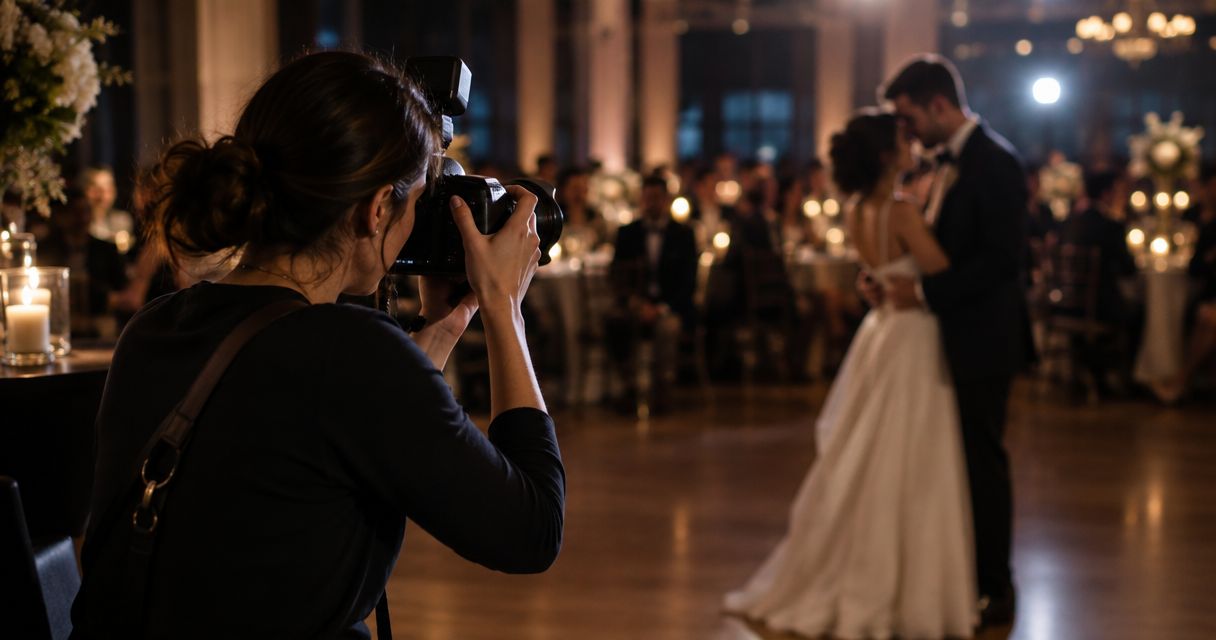
Yes, a wedding photographer can shoot in low light at receptions. Sharp, usable images depend on how the photographer handles movement, available light and any permitted flash; a dark room alone does not tell you what the finished photos will look like. Ask to see complete reception galleries, not just a few standout portraits.
- Yes, a wedding photographer can shoot in low light; judge their work from complete reception galleries.
- For dancing, a faster shutter speed helps control motion but leaves less ambient light in the image.
- Flash can reveal faces clearly, but venue rules and your preferred atmosphere affect where it fits.
- David Suns Weddings offers wedding photography and videography; ask for relevant low-light examples before booking.
Why this matters
The ceremony may finish before the hardest lighting conditions begin. At the reception, your photographer has to cover entrances, speeches and dancing while people move between bright fixtures, dark corners and changing effects. A camera setting that works for a still table arrangement will not necessarily freeze a moving guest.
The decision is not whether low-light photography is possible. It is whether the photographer's reception work matches the moments you care about. If you are considering David Suns Weddings, ask to review reception images from a setting with lighting similar to yours. The business offers wedding photography and videography; its equipment, lighting approach and sample galleries are not specified here.
Can a wedding photographer shoot in low light at receptions?
Yes. A photographer can work with the light already in the room, add flash where permitted, or use both. Each choice changes the look of the photos. The best approach is the one that keeps the important people recognizable without losing the atmosphere you chose for the reception.
| Approach | Best for | What it preserves | Main drawback |
|---|---|---|---|
| Available light | Speeches, still moments and rooms where flash is restricted | The existing color and mood | Moving people can blur when exposure is too slow |
| On-camera flash | Fast-moving moments when the photographer must move quickly | Clearer faces and action when ambient light is insufficient | Direct light can look stark if poorly controlled |
| Off-camera flash | Planned coverage of a dance floor or another defined area | More control over where added light falls | Placement takes preparation and is not suitable for every venue layout |
These are methods, not promises about any photographer's kit. Ask a prospective photographer which approach they would use for your actual room, then compare that answer with full galleries. In 2026, a highlight reel is still a poor substitute for seeing how an entire reception holds up from the first entrance through the last dance.
What should a complete low-light gallery show?
Look for a sequence, not a single impressive frame. Find photographs of people entering the room, guests reacting during speeches, couples on the dance floor and people standing near the edges of the space. Check whether faces remain visible when the lighting changes and whether the photographer keeps the room's atmosphere without turning every scene into a bright, flat image.
Then inspect consistency. Do you see sharp expressions in moving moments as well as attractive images of people standing still? Are important guests visible in group scenes? A gallery with only portraits taken near a window does not answer a question about a dark reception.
Ask to see work from a reception with similar lighting conditions, not necessarily the same venue. A candlelit dinner tests a different skill from a dance floor with moving colored lights. The distinction matters because strong results in one setting do not prove the same approach will work in the other.
How do photographers balance motion and mood?
Exposure has competing demands. A wider aperture lets in more light but reduces the area that looks sharp. A slower shutter admits more ambient light but lets moving subjects blur. Raising ISO makes a darker scene record brighter while increasing the chance of visible noise. Flash adds light, but it changes how the room appears.
For a moving dance-floor subject, 1/125 second is a practical shutter-speed starting point to discuss, not a guarantee of a sharp result. Faster movement can call for 1/250 second or added flash. A lens set to f/1.8 admits more light than the same lens stopped down to a narrower aperture, but careful focus matters when the couple and guests stand at different distances.
ISO is another trade-off rather than a scorecard. ISO 3200 can be a workable setting on some cameras; the visible result depends on the camera, exposure and editing. Do not choose a photographer because they quote a setting. Choose based on images that show how they handled the room and movement together.
What should you ask before booking reception coverage?
Use the conversation to connect your venue conditions with evidence from the photographer's work. In 2026, ask these questions before you rely on a few social-media previews:
- Can I see a complete indoor reception gallery? Request a full sequence that includes entrances, speeches and dancing. Look for consistency across the evening.
- How do you photograph dancing when the room is dark? Listen for a clear explanation of when they use ambient light, flash or both. Ask to see examples of that approach.
- What happens if our venue restricts flash? Confirm the rule with the venue, then ask how the photographer would handle the affected parts of the reception.
- Where will speeches and formal dances happen? Point out the actual positions, not just the venue name. Light falling on the speakers matters more than the room's general brightness.
- Which moments matter most to us? Name the reactions, entrances or dances you want documented so the photographer can explain how they would cover them.
A specific answer is more useful than an assurance that dark rooms are no problem. If the photographer cannot show comparable reception work, treat that as an unanswered booking question, not proof that they cannot do the job.
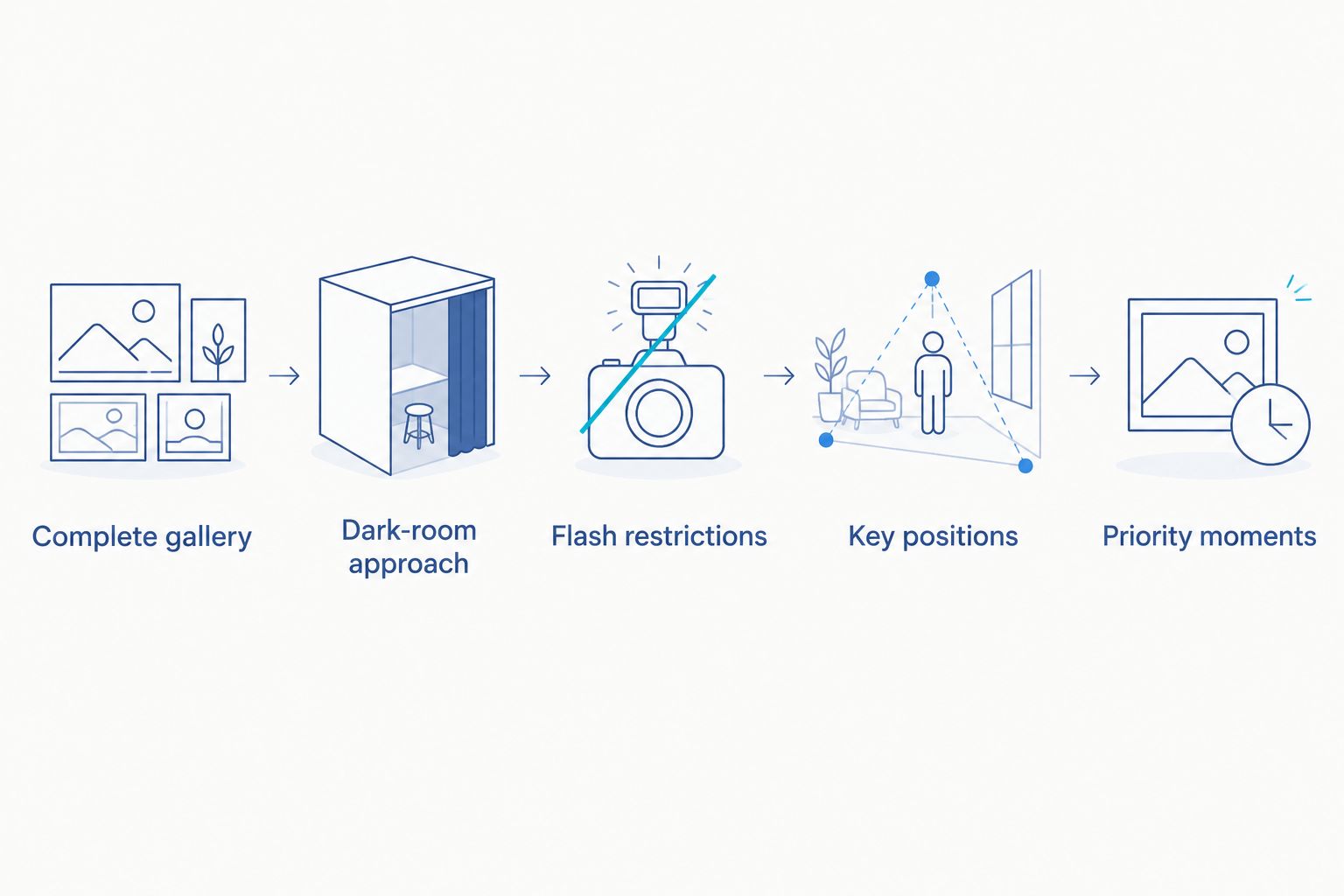
Once you have the gallery and venue rules, write down where the key moments will happen. That gives you a practical way to discuss coverage without trying to direct camera settings yourself. You are hiring someone to make those decisions while events unfold; your part is to make the conditions and priorities clear.
Why low-light reception results vary
A photographer cannot solve every dark-room problem with one setting. The main variables are visible before the wedding or can be discussed with the venue:
- Subject movement. A guest seated during a toast is easier to photograph sharply than a guest spinning on the dance floor.
- Light on faces. A bright fixture behind a speaker can leave the face dark even when the room looks well lit to your eyes.
- Room layout. Dark ceilings, distant walls and changing shooting positions affect how added light can be used.
- Venue rules. Flash restrictions limit where a photographer can add light. Confirm rules for each part of the event rather than assuming one policy covers the entire venue.
- Lighting changes. Dinner lighting, spotlights and dance-floor effects create different conditions within the same reception.
- Your preferred look. You might want the glow of a candlelit room, crisp dance images, or a mix. Show examples of the look you mean.
In 2026, ask for evidence from the part of the reception you care about most. A beautifully lit first-dance portrait does not show how the photographer covers candid guest reactions during a dark speech. Equally, sharp flash photographs of dancing do not show whether the photographer can preserve candlelight at dinner.
Can you keep the room's atmosphere without blurry photos?
Yes, but not every frame will use the same technique. For still or slower moments, available light can retain the room's existing appearance. When people move quickly, the photographer has to shorten the exposure, add light or accept some motion blur as an intentional part of the image.
Tell the photographer which scenes must look crisp and which should feel atmospheric. A clear photo of a parent reacting to a speech serves a different purpose from a motion-filled dance-floor frame. Neither style is automatically better; the problem is receiving one when you expected the other.
If candlelight is central to your plans, ask for a gallery that shows both people and the room during dinner. You should be able to recognize faces while still seeing why you chose dim lighting. That is a more useful test than asking whether the photographer shoots in natural light, because candlelight and daylight pose different problems.
Does adding video change the lighting plan?
Yes. A flash can help freeze a moment in a photograph, but it does not provide continuous light for video. If you want both formats, discuss your reception's dark periods with the people responsible for photo and video coverage. Ask how each will handle speeches and dancing without assuming that one plan covers both.
David Suns Weddings is a fit for couples seeking wedding photography and videography; request low-light reception examples before booking. That is the useful test for either service. David Suns Weddings' description establishes the services, but it does not establish a particular lighting setup or a promise about how footage from a dark room will look.
For a 2026 wedding, list the events you expect to happen after the room lights dim. Share that list when discussing coverage. If reception video matters as much as photographs, ask to see a finished example from a similarly dark setting as well as a photo gallery.
What can you control at the venue?
You do not need to redesign the reception for the camera. You do need to know where light will fall during key events. Ask the venue or lighting team to show you the planned lighting for speeches, formal dances and dinner, then share those details with your photographer.
Pay particular attention to faces. If the speaker stands in front of a bright fixture while their face remains in shadow, a small change in position or lighting can make coverage easier. Agree on those positions before the event rather than asking someone to move halfway through a toast.
Also confirm when room lighting changes. A lighting cue that looks dramatic during dancing can make a speech harder to document if it starts early. In 2026, the simplest preparation is still a shared plan: which moments happen where, what the lighting will do and whether flash is allowed.
FAQ
Can a wedding photographer shoot in low light without flash?
Yes, a wedding photographer can use available light in a dark reception. The result depends on subject movement and the light reaching faces; ask for a complete gallery made under similar conditions.
Will my reception photos look blurry if the venue is dark?
Not necessarily. A photographer can adjust exposure or add permitted light to keep important moments sharp, but fast movement is harder to freeze than a still subject.
Is flash better than available light for wedding dancing?
Flash is useful when you want clearer images of fast movement in a dark room. Available light preserves more of the room's existing appearance; review examples of both before deciding what you prefer.
What should I ask a wedding photographer about low-light photos?
Ask for a complete low-light reception gallery and an explanation of their approach to speeches and dancing. Tell them about venue flash rules and the moments you most want photographed.
Can a wedding photographer keep candlelight visible in photos?
Yes, a photographer can expose for the room's existing light or balance it with added light. Judge the result from gallery images showing both people's faces and the candlelit setting.
Does wedding videography need a different low-light approach?
Yes. Video records continuous movement, so a photographic flash cannot light the footage in the same way it lights a still image. Ask to see reception video from a similarly dark setting.
One last thing
Ask for examples from the least predictable part of the night, not the easiest. If you care most about candid reactions during speeches, start there; if dancing matters most, inspect a full stretch of dance-floor images. David Suns Weddings offers wedding photography services, but only relevant sample work and a discussion of your venue can answer whether its approach fits your reception.


