
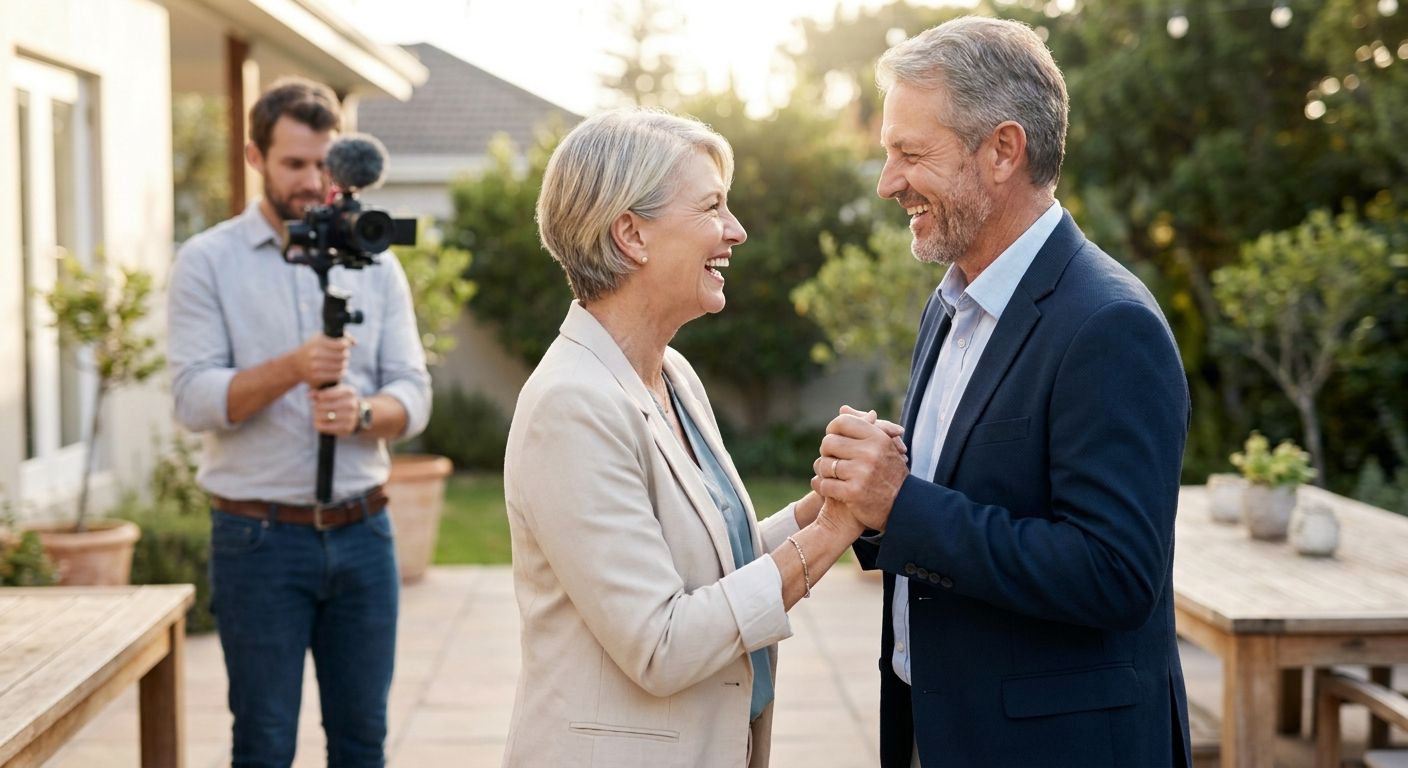
Second marriages don't need the three-camera, twelve-hour cinematic package built for a 22-year-old couple's first wedding — they need a wedding videographer for second marriage who reads the room, keeps things intimate, and prices the coverage to match a shorter, calmer day.
- A wedding videographer for second marriage should shoot documentary-style, not full theatrical coverage — the intimate package fits this in 2026.
- Vow renewal-style filming works best when blending kids from prior marriages into the ceremony — Consider it over a standard package.
- Tight-budget videography packages suit shorter second-wedding timelines under 75 guests in 2026 — Buy if your day runs under six hours.
- Civil ceremony coverage is the right call when you're skipping the big reception entirely.
Why this matters
Second weddings run shorter, smaller, and more deliberately than first weddings — often 40 to 75 guests instead of 150, and a ceremony-plus-dinner format instead of a full reception. A videographer who defaults to the standard all-day, three-act wedding film template will either overshoot the day or charge you for hours you don't need.
In 2026, more couples marrying for the second time are asking for shorter highlight reels, discreet coverage, and explicit direction on how (or whether) kids from a previous marriage appear in the final film. That is a different brief than a first wedding, and it changes what good videography looks like for this buyer.
David Suns Weddings works with couples on both photography and videography, and second-marriage bookings almost always start with the same question: how short can the coverage block be without losing the moments that matter?
Who this is for
This guide is for couples planning a second wedding — whether it's a courthouse ceremony with twenty people or a backyard dinner for sixty — who want video coverage that matches the scale and tone of the day instead of a scaled-down version of a first-wedding package. If you're weighing wedding photography for second marriages alongside video, the same logic applies: shorter timeline, tighter shot list, less pageantry.
It's also for couples with blended families, where the film needs to include children from a prior marriage without making the video about anyone but the two people getting married.
What to look for in wedding videography for a second marriage
Documentary instinct over theatrical setups
A videographer built for first weddings will often plan staged reveals, extended first-dance sequences, and reception game footage. For a second wedding, you want someone comfortable shooting 30 to 45 minutes of real moments and trusting that's enough film. Ask to see a comparable short-format example before you sign anything.
Flexible hour blocks, not fixed all-day packages
Most second weddings wrap the entire event — ceremony, toasts, dinner — in three to five hours. Paying for an eight-hour package built around a full reception timeline burns budget you could move to the photographer or the honeymoon instead.
Comfort with blended-family framing
If children from a previous marriage stand in the ceremony, the videographer needs a plan for including them without turning the film into a family reunion reel. Have that conversation during planning, not on the wedding day.
Fast-turnaround edit options
Second-wedding guests are often older and more geographically scattered, and far less likely to gather for a big reveal party six weeks later. A same-day edit or a 48-hour highlight film matters more here than a long cinematic trailer.
Discretion around ceremony type
Civil ceremonies, courthouse weddings, and small backyard vows call for a different camera presence than a 200-guest ballroom wedding. One shooter with a quiet setup beats a two-camera crew with boom mics for most second-marriage ceremonies.
Pricing that reflects the shorter day
An eight-hour package shouldn't be your only option. Look for a videographer willing to quote a shorter block specifically because the day itself is shorter — not one who trims a token amount off the standard bundle.
Top picks for second-marriage videography
The quiet-vow pick: intimate wedding coverage. Built for ceremonies under 50 guests where the point is the vows, not the production. One shooter, minimal gear, a highlight film under 10 minutes. If your 2026 day is a backyard ceremony or a small restaurant dinner, intimate wedding videography is the package to start from. Verdict: Buy.
The blended-family pick: vow renewal-style filming. Designed around ceremonies where kids, parents, or extended family take a more active role than a standard wedding party. The pacing borrows from vow renewal videography, which already frames multi-generational moments without losing the couple. Verdict: Consider if children from a previous marriage have a formal role.
The practical pick: tight-budget packages. For couples who want the day documented without a four-figure cinematic bundle, budget wedding videography packages cut the extras — drone work, extended reception coverage, long-form trailers — and keep the ceremony and toasts. Verdict: Buy if your day runs under six hours and guest count stays under 75.
The courthouse pick: civil ceremony coverage. For the shortest second weddings — a 15-minute courthouse ceremony followed by dinner for eight — full-package videography is overkill. Civil ceremony videography focuses on the vows and nothing else. Verdict: Consider if you want those minutes on film; Skip if you know you won't watch it back.
The wildcard: same-day edit coverage. A short film delivered before the night ends, screened at dinner. It costs more than a standard edit and requires an editor on site, so it only pays off when guests have traveled and won't reconvene. Verdict: Consider for destination second weddings, Skip for a local courthouse day.
“A second wedding doesn't need the same eight-hour coverage block as a first one — it needs the right forty minutes.”
What to avoid
- All-day reception packages built for 150-guest weddings. They're priced for six extra hours of footage you won't use when your guest list tops out at 60.
- A first-wedding shot list in disguise. If the proposal defaults to a grand entrance sequence and an hour of reception games, the videographer hasn't adjusted the template for a second-marriage brief.
- No fast-turnaround option at all. A film that arrives eight weeks later reaches fewer of your guests than a highlight reel they can watch the same weekend.
Verdict comparison
| Package style | Best for | Coverage block | Turnaround | Verdict |
|---|---|---|---|---|
| Intimate coverage | Under 50 guests, backyard or small venue | 3-4 hours | Highlight film under 10 min | Buy |
| Vow renewal-style | Blended families, kids in the ceremony | 4-5 hours | Standard edit | Consider |
| Tight-budget package | Under 75 guests, under 6 hours | 3-5 hours | Trimmed edit, no extras | Buy |
| Civil ceremony | Courthouse or 15-minute ceremonies | 1-2 hours | Ceremony-only edit | Consider / Skip |
| Same-day edit | Destination second weddings | Full day | Same night | Consider |
Book your second-wedding videographer
Get a package quote sized to your actual timeline, not a full-day default.
FAQ
What's the best wedding videographer for a second marriage in 2026?
The best fit in 2026 is a videographer offering documentary-style coverage in a shorter hour block rather than an all-day cinematic package. Ask directly whether they will quote 3-5 hours instead of the default 8-hour bundle.
Is a full-day videography package necessary for a second wedding?
No. Most second weddings run 3 to 6 hours total, so an 8-hour package pays for time you won't use. A trimmed package covering ceremony and toasts fits most second-marriage timelines.
How much does wedding videography cost for a smaller second wedding?
Cost depends on hours booked and add-ons like same-day edits or drone footage, and pricing varies by videographer and market. Request a quote built on your real timeline rather than a standard full-day rate.
Should children from a previous marriage appear in the wedding video?
That's a direction call the couple makes before the wedding day, not during it. A videographer used to blended-family weddings will raise it during planning and build the shot list around your answer.
Is documentary-style better than cinematic for a second wedding?
Documentary-style usually suits a second wedding better because the day itself is less staged. Cinematic coverage relies on planned reveals and longer post-production, which needs a bigger, more choreographed event to work.
Do second marriages need a videographer at all?
It depends on whether you want the vows preserved in motion or are content with photos. Many second-marriage couples book a short ceremony-focused film instead of skipping video entirely.
How long should a second-wedding highlight film be?
Under 10 minutes fits most intimate second weddings, since the goal is the ceremony and key toasts rather than a full event narrative. Longer films only make sense when the reception itself runs several hours.
Can photography and videography be combined for a second marriage?
Yes, and a shorter day often makes a combined booking cheaper than hiring both separately. Ask for a combined quote before you book either service on its own.
One last thing
The couples happiest with their second-wedding film in 2026 aren't the ones who bought the biggest package — they're the ones who told their videographer exactly how long the day would run and which four moments mattered, then booked coverage to match. Name the hours first. The package should follow your timeline, not set it.


