
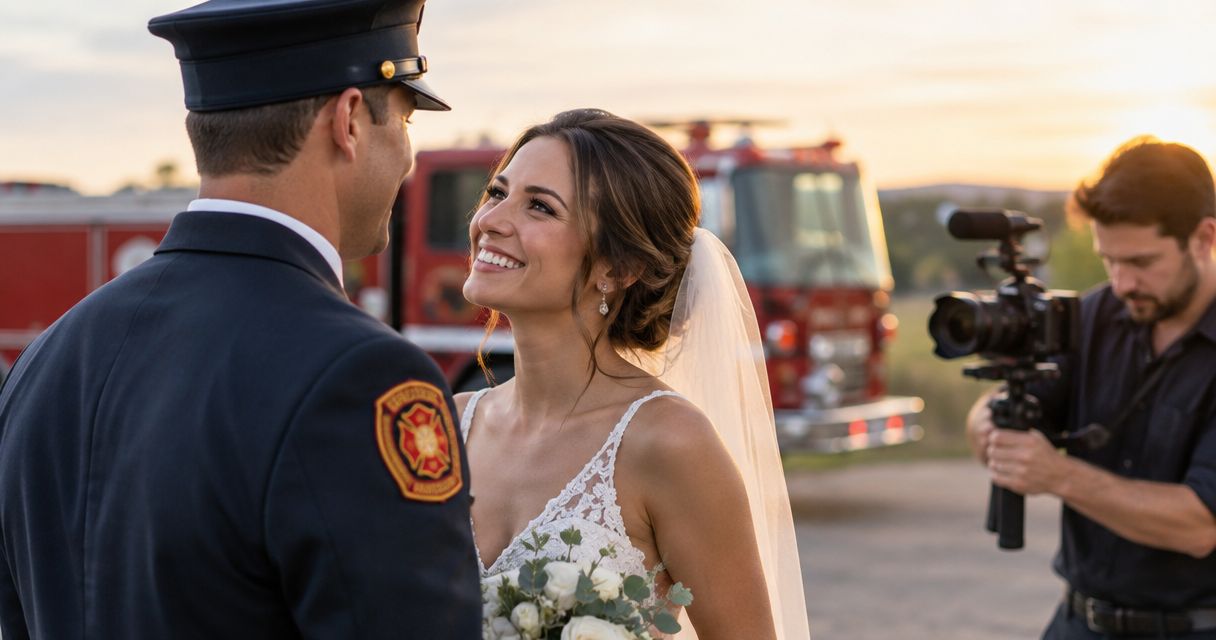
Wedding videography for first responders means building the filming schedule around a shift bid calendar, not a Saturday in peak season, then designing backup plans for the one call-out that always seems to land on the ceremony. Firefighters, police officers, paramedics, and dispatchers marry on dates their departments approve months in advance, and the videography plan has to survive mandatory overtime, holiday freezes, and a partner who might get paged mid-vow.
- Wedding videography for first responders in 2026 works best when the filming schedule locks to a shift bid, not a venue calendar.
- Same-day edit films let a firefighter's crew watch the ceremony highlight reel before the next 24-hour shift starts.
- David Suns Weddings recommends a named backup shooter and a 30-45 minute buffer for every first responder wedding date.
- Multi-camera ceremony coverage matters more here than for most couples: it protects footage if a partner is paged during the service.
Why wedding videography matters for first responders
Most fire departments run 24-hour shift rotations, sometimes stacked as 48/96 or 24/48 patterns, with days off scheduled through a rotating system some departments still call a Kelly day. Police and EMS crews more often work 12-hour rotating shifts with mandatory overtime clauses that can override a scheduled day off with almost no notice.
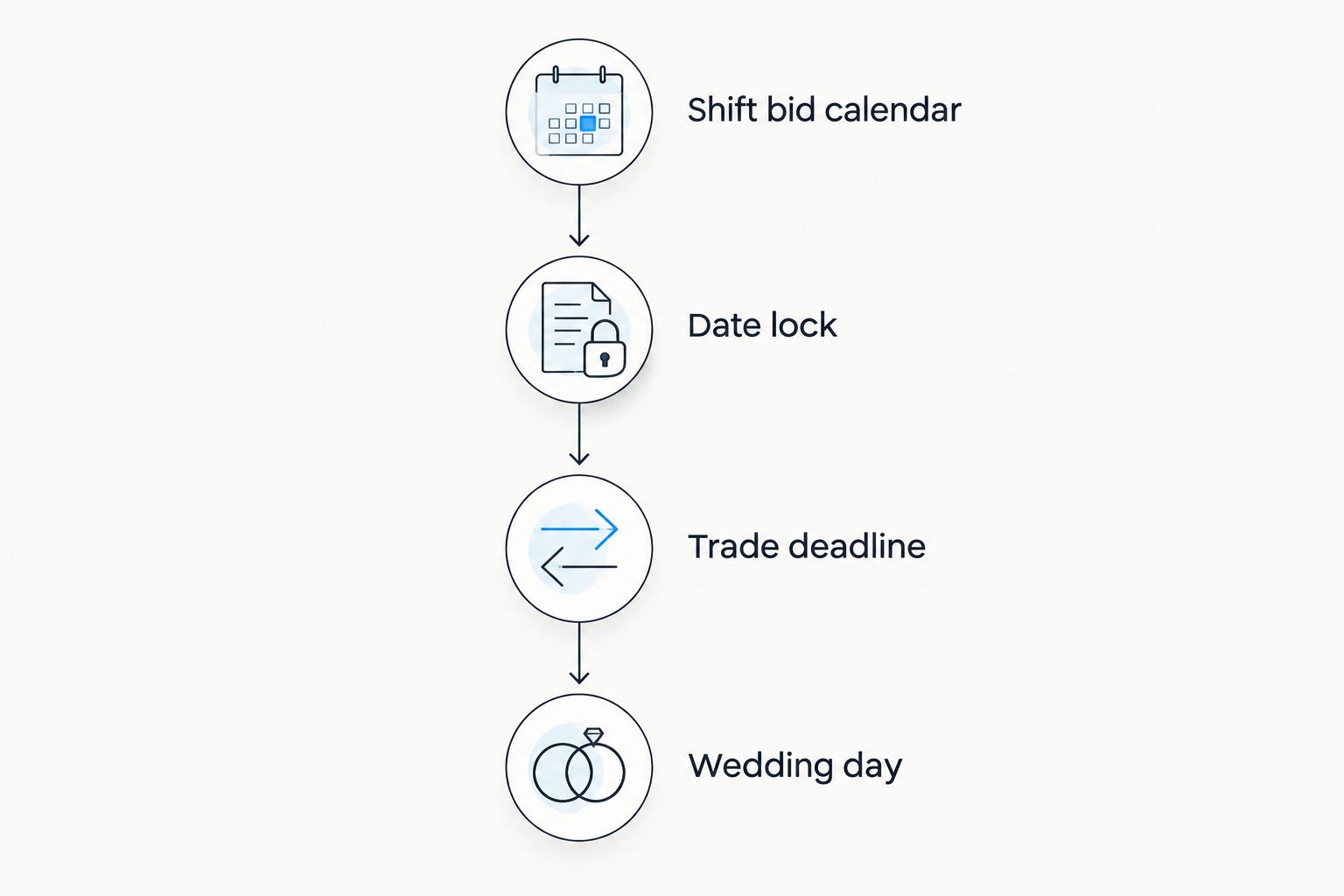
That means the wedding date isn't really chosen by the couple first. It's chosen by the shift bid calendar, then confirmed with the videographer second. A wedding day timeline planning guide built for a typical couple assumes flexible hours on both sides; a first responder wedding needs the opposite assumption baked in from the first phone call with David Suns Weddings.
Map the shift bid before you set a date
The single most common first responder wedding mistake in 2026 is locking a venue before checking the department's bid calendar for that year.
- Pull the shift bid calendar for the wedding year before signing any venue contract
- Flag mandatory overtime freeze windows, including holidays, fire season, and election cycles for police departments
- Request any shift trade in writing, never verbally, and keep a copy
- Build a 2-3 day buffer around the ceremony date in case of a forced trade
- Confirm the honeymoon dates against the next bid cycle, not just the wedding date
Build a backup plan for call-outs
A page or radio call doesn't check the ceremony schedule. Plan for it instead of hoping around it.
- Name a second shooter who can start solo if the crew's arrival is delayed
- Share a non-emergency contact line with the video team, not the couple's personal cell
- Set a short text-tree so the crew knows who to call if a page comes in mid-ceremony
- Build a 30-45 minute buffer into the ceremony start time
- Confirm with the officiant ahead of time that a short delay won't break the flow of the service
Pick a videography style that survives interruptions
Tightly scripted cinematic sequences fall apart the moment a shift call-out changes the timeline. Documentary-style coverage doesn't.
- Documentary-style filming over heavily scripted cinematic sequences
- Multi-camera ceremony coverage so no single shot depends on one operator's position
- A same-day edit packages format for a short highlight reel the crew can watch before the next shift starts
- Drone footage scheduled early in the day, before weather or a call-out changes the plan
- A shot list that survives a 20-minute schedule shift without a full re-plan
Plan for uniform and ceremonial elements
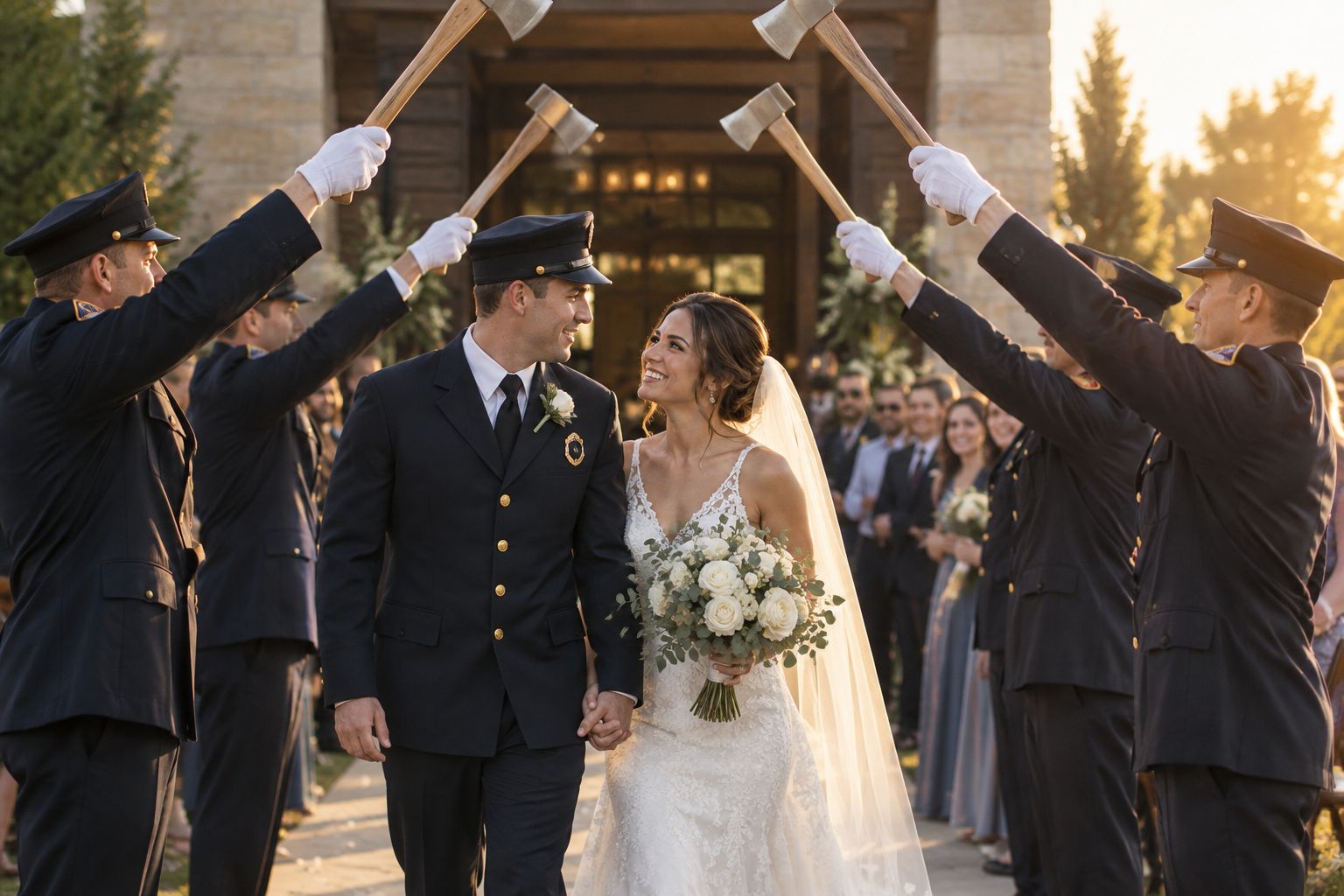
Badge pinnings, honor guards, and sword or axe arches need a walkthrough with the videographer, not a first look on the wedding day.
- Badge pinning or shield presentation set up in static, well-lit framing
- Honor guard or sword/axe arch choreographed with the crew beforehand
- Station bell or radio dispatch audio noted for possible use in post-production, with permission
- Department patches, unit numbers, and rank insignia framed clearly in close-up shots
Include coworkers who can't attend
The crew on shift that day still wants to see the ceremony. Build that into the plan instead of treating it as an afterthought.
- A private livestream link sent directly to the shift roster
- A guestbook video booth for coworkers to record a message ahead of time
- A private highlight reel shared within the same week, not months later
- A short toast segment at the reception reserved for a crew representative
Lock logistics for short-notice bookings
Engagements move fast when shift schedules are unpredictable, and turnaround terms matter more here than the reel style.
- Ask about turnaround time before signing, not after the contract is done
- Confirm reschedule terms in writing given how often shift bids change; a booking on short notice guide covers what to ask
- Pick a deposit structure that survives a forced date change
- Build the day-of timeline around shift end times, not sunset
Protect the footage long term
Once the shift rotation moves on, there's no re-shoot.
- Request raw footage backup on a separate drive, not just the edited film
- Confirm the family receives a personal archive copy
- Ask how long files stay on the studio's servers before deletion
- Store a duplicate copy offsite, not only in the cloud
Comparison: coverage options for first responder weddings
| Coverage type | Best for | Key limitation |
|---|---|---|
| Same-day edit film | Crews who need to see the highlight reel before the next shift | Shorter runtime than a full documentary cut |
| Documentary-style full coverage | Couples who want every ceremonial moment on record | Longer editing turnaround |
| Multi-camera ceremony setup | Weddings with honor guard or uniform choreography | Requires more crew coordination on site |
| Reception-only coverage | Couples with a short, unofficiated ceremony | Misses the badge pinning or vow exchange |
| Livestream add-on | Coworkers on shift who can't attend in person | Depends on venue internet reliability |
David Suns Weddings' approach to wedding videography for first responders starts with the shift calendar, then fits the film style around it — that order is the difference between a smooth wedding day and a scramble.
Common mistakes first responders make
- Booking the venue and videographer before checking the department's shift bid calendar
- Skipping a named backup shooter, then scrambling when a partner or officiant gets paged
- Never walking the honor guard or sword arch choreography with the video crew beforehand
- Waiting until after the wedding to ask about turnaround time on the film
- Treating the livestream for coworkers on shift as a last-minute add-on instead of part of the plan
FAQ
What is wedding videography for first responders?
It's wedding filming planned around a shift bid calendar, mandatory overtime, and possible call-outs instead of a fixed venue schedule. The filming style, timeline, and backup plan all get built around the department's rotation first.
How far in advance should a first responder book a wedding videographer?
As soon as the shift bid calendar for the wedding year is confirmed, since venue and videographer dates need to lock against that calendar, not the other way around. Booking before the bid is confirmed risks a forced reschedule.
Can a wedding videographer work around a 24-hour shift schedule?
Yes, when the timeline is built with a buffer and a named backup shooter in place. Documentary-style, multi-camera coverage absorbs schedule shifts better than tightly scripted cinematic sequences.
Is a same-day edit worth it for a first responder wedding?
Yes, when coworkers on shift want to see the ceremony before the crew reports back to duty. A short highlight reel delivered the same day is the fastest way to include them.
How do you include coworkers who are on shift during the wedding?
A private livestream link, a guestbook video booth, or a same-week highlight reel are the three most common options. Each one lets a coworker on shift see or contribute to the day without attending in person.
What's the best videography style for a first responder wedding?
Documentary-style, multi-camera coverage holds up best against schedule interruptions. It doesn't depend on a single operator's position or a tightly scripted sequence of shots.
How much notice does a videographer need for a short-notice first responder wedding?
Ask directly before signing, since turnaround and scheduling flexibility vary by studio. Confirming reschedule terms in writing matters more than the notice window itself given how often shift bids change.
One last thing
Asking to sync department radio dispatch audio, with permission, under a same-day edit reel is a small detail most couples never think to request, and it turns a standard highlight film into something a fire crew or a precinct will actually pass around in 2026. It costs nothing extra to ask for and it's the kind of detail that makes a first responder wedding film feel built for the department, not just adapted for it.


