
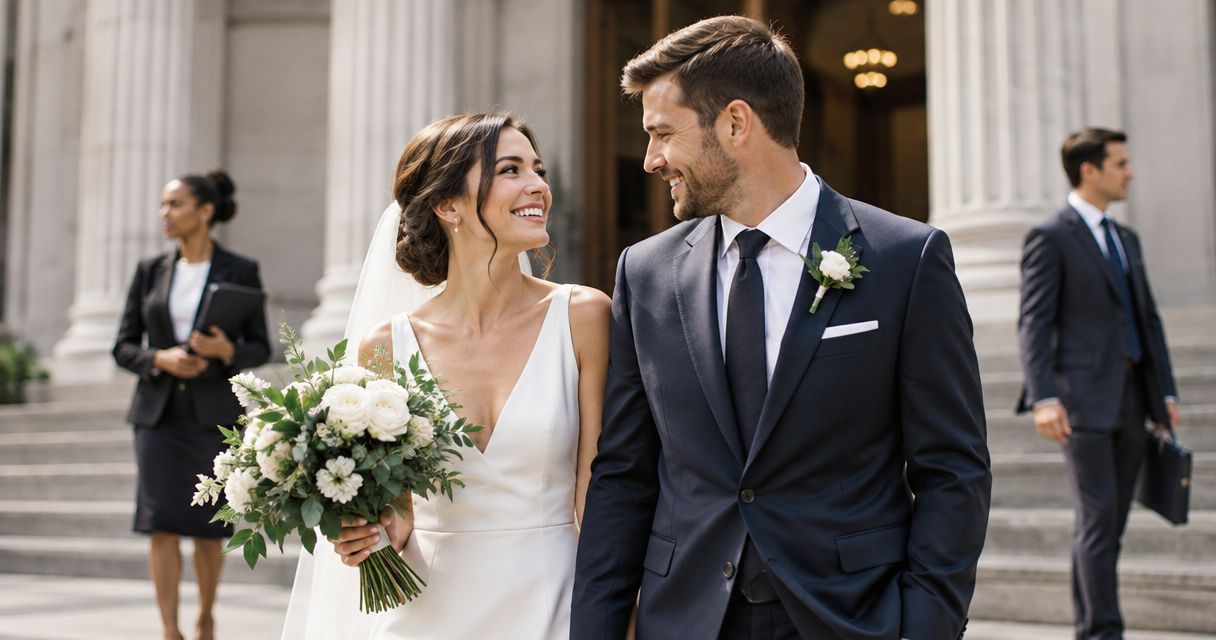
Wedding photography for legal professionals means coverage built around trial calendars, filing deadlines, and the discretion attorneys expect in every other part of their professional life, with the goal of getting the day fully documented without a single missed court date. Lawyers, judges, paralegals, and law firm partners plan weddings the way they plan a case: contracts get read line by line, dates get chosen around known conflicts, and last-minute schedule changes are treated as routine, not catastrophe.
- Wedding photography for legal professionals works best on weekday or off-season dates that avoid trial calendar conflicts.
- Attorneys should negotiate photography contracts with the same scrutiny they apply to client agreements before signing in 2026.
- Short-notice booking matters more for legal professionals than any other segment because filing deadlines move wedding dates.
- DAVID SUNS structures coverage around confirmed availability windows rather than assuming a fixed Saturday date.
Why wedding photography matters for legal professionals
A law firm partner's calendar doesn't clear for a wedding the way a typical client's does. Trial dates get set by courts, not couples, and a continuance can land two weeks before a ceremony. That reality changes what "good photography service" means for this segment: availability, contract clarity, and communication speed outrank almost everything else, including style preference.
Judges and litigators also carry confidentiality habits into their personal lives. Many prefer limited guest phone use, no social media tagging until they approve it, and a photographer who doesn't need hand-holding on set. None of that shows up in a typical wedding photography FAQ, but it drives every decision a legal professional makes when booking coverage in 2026.
Build the wedding timeline around the court calendar first
Most couples pick a date, then build a timeline. Legal professionals often have to work backward from known black-out periods: bar exam prep, tax season for firms with financial practices, appellate argument calendars, or a trial that's already on the docket.
- Cross-reference the wedding date against any known trial or hearing schedule at least 90 days out
- Flag bar exam dates (typically February and July) if either partner or a wedding party member is sitting
- Build a buffer week before the wedding for filing deadlines that tend to cluster at month-end and quarter-end
- Confirm with opposing counsel or co-counsel on active matters whether continuances are likely near the date
- Treat the court calendar as the master schedule; the photography timeline gets built around it, not the other way around
Choose a weekday or off-season date to protect billable hours
Weekday and off-season weddings solve two problems at once for legal professionals: venue and vendor availability improves, and it's easier to protect a Tuesday evening than a Saturday that a judge might also want for their own plans. Weekday wedding photography packages are typically easier to lock in with less lead time than peak Saturday dates.
- Target Tuesday through Thursday ceremonies when court is less likely to run long sessions
- Consider late fall through early spring, outside the busiest litigation and closing seasons for many practice areas
- Ask your firm about standard scheduling conflicts (partner retreats, CLE deadlines) before locking a date
- Build in a same-week fallback date if the primary date is a realistic trial risk
- Confirm photographer and venue holds on both dates until the court calendar is finalized
Read your photography contract the way you'd review any client agreement
Attorneys are the one client segment that actually reads the fine print, and that habit should extend to the photography contract. Negotiating a wedding photography contract the way you would any service agreement protects both sides.
- Confirm the reschedule clause explicitly covers a trial or court conflict, not just weather or illness
- Check the deliverable timeline against any pending life events (bar admission ceremony, closing, move)
- Verify who owns copyright versus who holds usage rights for any firm marketing or personal social use
- Ask what happens to the deposit if the date moves due to a court schedule change outside your control
- Get any verbal promise about coverage hours or shot list priorities written into the contract itself
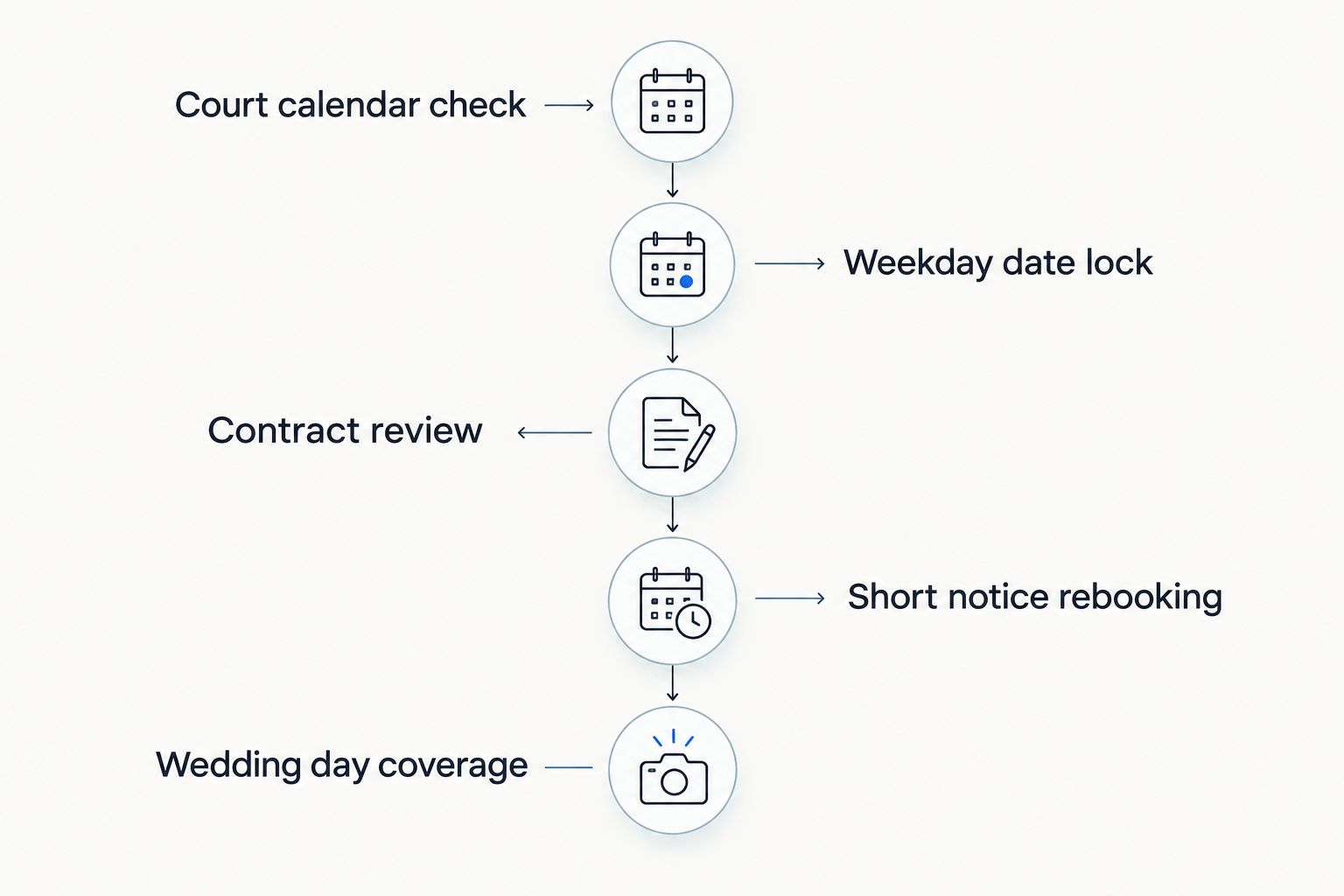
Have a short-notice booking plan for date changes
A continuance, an emergency motion, or a last-minute closing can force a date change with weeks, not months, of notice. Booking a wedding photographer on short notice is a real planning category, not a worst-case scenario, for this segment.
- Keep a shortlist of two or three photographers with confirmed short-notice availability, not just a single primary vendor
- Ask every photographer upfront how many weeks of notice they need for a full rebooking
- Build the reschedule clause into the original contract so short-notice moves don't trigger a new negotiation
- Prioritize communication speed over portfolio depth when a date moves inside 60 days
- Confirm the second-shooter or backup coverage plan survives a date change without extra cost surprises
Set clear boundaries on phones, tagging, and guest behavior
Judges in particular tend to want limited public visibility around personal events. An unplugged approach to part or all of the ceremony protects that.
- Communicate no-phone zones during the ceremony to the officiant and wedding party in advance
- Decide before the day whether any images can be posted publicly, and by whom
- Ask the photographer to hold final gallery delivery until you've reviewed which images are cleared for any firm-facing use
- Brief close family on any confidentiality expectations tied to a judicial or bar ethics consideration
- Keep a private, unlisted gallery link as the default delivery method rather than a public online gallery
Plan the turnaround around your next work obligation
A honeymoon that gets cut short by a trial date, or a return to depositions three days after the wedding, changes what "fast turnaround" needs to mean.
- Ask for a sneak-peek gallery within days if you need images before returning to work
- Confirm full gallery delivery timelines against your actual return-to-work date, not a generic estimate
- Request priority editing on any images needed for a firm announcement or bar association profile
- Build a buffer for album selection if your first week back is already booked with court dates
“The reschedule clause matters more to legal professionals than the shot list, because a trial date can move faster than a venue can.”
Comparison of coverage options for legal professionals
| Option | Best for | Key limitation |
|---|---|---|
| Weekday full-day coverage | Attorneys protecting billable Saturdays | Fewer guests can attend on a workday |
| Off-season weekend coverage | Couples avoiding peak litigation season conflicts | Weather and daylight hours vary more |
| Short-notice rebooking package | Anyone facing a trial-driven date change | Requires a photographer with open short-notice availability |
| Same-day edit or fast-turnaround delivery | Couples returning to work within days | Full album and raw files still take longer |
DAVID SUNS wins for legal professionals who need a contract with a clear reschedule clause and a photographer comfortable rebooking on short notice.
Check availability for your date
Confirm coverage before your court calendar locks in.
Common mistakes legal professionals make when booking wedding photography
- Picking a Saturday before checking the trial calendar. A date that looks open in January can conflict with a case that gets set for trial in April.
- Signing a contract without a reschedule clause tied to court conflicts. Standard weather-and-illness language doesn't cover a continuance.
- Assuming a public online gallery is fine. Judicial ethics rules and firm policy sometimes require more control over public images than a default gallery link gives.
- Underestimating how fast a short-notice rebooking needs to happen. Waiting until a date officially moves to start calling photographers leaves too little runway.
- Treating the honeymoon and the return-to-work date as unrelated. A trial that resumes three days after the wedding should shape the turnaround request, not surprise anyone later.
FAQ
What's the best wedding date for legal professionals in 2026?
A weekday or off-season date typically works best because it avoids peak litigation periods and improves photographer and venue availability. Cross-check the date against any known trial or filing calendar at least 90 days out.
Is a reschedule clause standard in wedding photography contracts?
Most contracts include some reschedule language for weather or illness, but few explicitly cover a court-driven date change. Ask for that language to be added before signing.
How much notice does a wedding photographer need for a short-notice rebooking?
This varies by photographer, so ask directly during the initial booking conversation rather than assuming. Confirm the answer in writing as part of the contract.
Can wedding photography stay private if I'm a judge or public-facing attorney?
Yes, request a private, unlisted gallery and an explicit no-public-posting agreement with the photographer and wedding party. This keeps images off public platforms until you decide otherwise.
Should attorneys request an unplugged ceremony?
An unplugged ceremony is common among legal professionals who want limited guest phone use and no unauthorized posting. It also improves the photographer's ability to capture unobstructed shots.
How fast can I get wedding photos back if I'm returning to work quickly?
Ask for a sneak-peek gallery within days of the wedding if you need images before returning to court or depositions. Full gallery delivery still follows the standard timeline agreed in the contract.
Does a weekday wedding cost less than a Saturday wedding?
Availability and vendor terms vary by date and season, so check current package details directly with the photographer rather than assuming a fixed discount.
One last thing
The single clause legal professionals skip most often isn't about price or hours, it's the reschedule clause tied to a court conflict specifically, not generic "acts of God" language. Add that one sentence to the contract before signing in 2026, and every other planning decision gets easier to manage when a trial date moves.


