
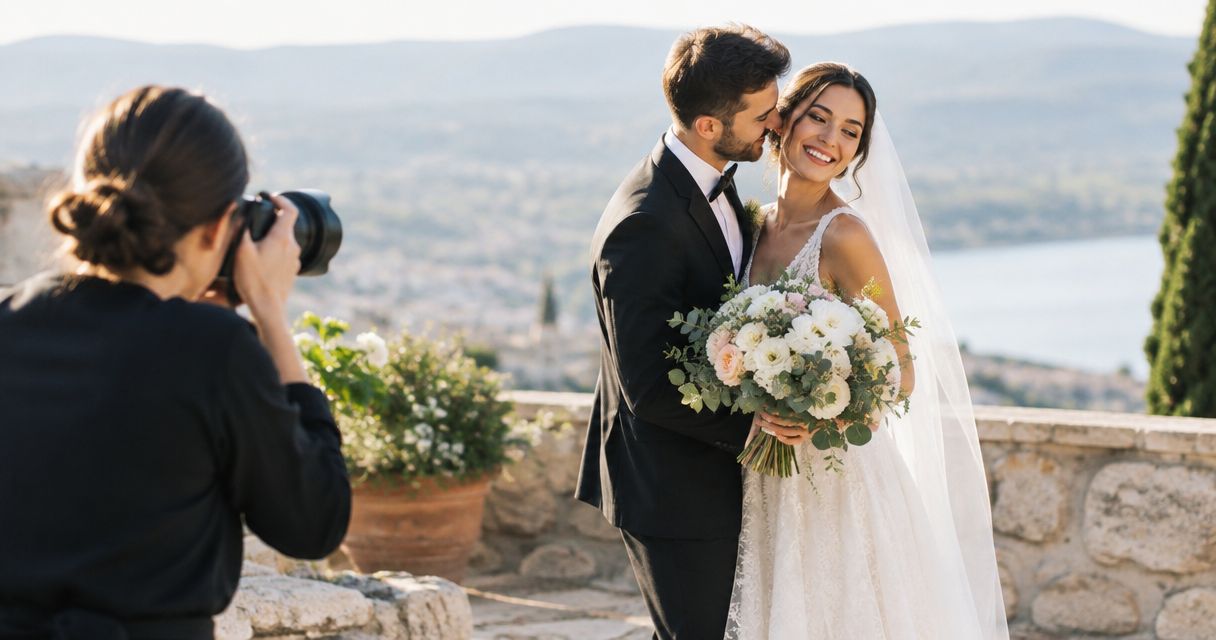
Request specific wedding-photo poses by sending your photographer a prioritized reference list, explaining what you like about each image, and discussing where those portraits fit into the timeline. For your 2026 wedding, distinguish essential portraits from optional inspiration and agree on alternatives when a pose conflicts with your comfort, clothing, location, or schedule.
- How to request specific poses for wedding photos: share references, explain preferences, and prioritize your wedding shot list.
- Treat reference photos as direction, not a promise of identical lighting, scenery, or expressions.
- Separate essential family portraits from optional couple poses before planning your portrait timeline.
- David Suns Weddings offers wedding photography and videography for engaged couples; discuss pose preferences before booking.
Why this matters
A saved photo tells your photographer what caught your eye. It does not necessarily explain whether you want the same hand placement, a similar mood, or that particular background. Describe the part you want to preserve rather than asking for a complete copy.
Your 2026 portrait plan also needs to leave room for the wedding itself. Use your request list to identify what deserves dedicated attention, not to script every interaction. David Suns Weddings is for engaged couples seeking wedding photography and videography; bring your portrait priorities to the booking conversation through David Suns Weddings.
How to request specific poses for your wedding photos
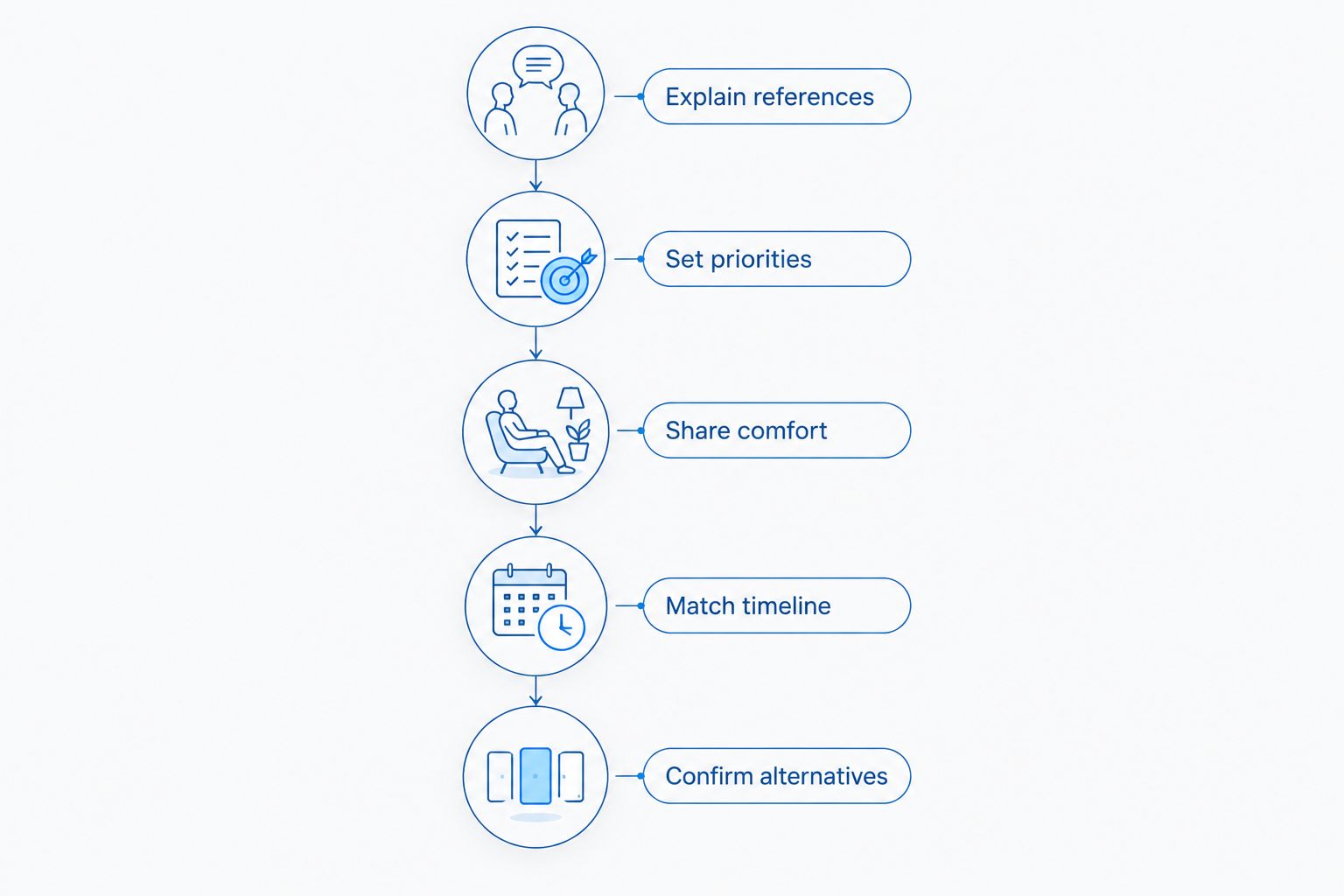
Use the following sequence to turn inspiration into instructions your photographer can discuss and plan around. Keep the final version in a shared document rather than spreading requests across messages, screenshots, and conversations.
1. Identify what you want from each reference
Choose images because they show a specific preference, not simply because they look beautiful. Name that preference underneath the image: face-to-face positioning, a walking portrait, visible outfit details, or a close embrace.
Separate posing from the other elements of the photograph. A portrait taken against a dramatic landscape contains more than a pose; its setting, light, framing, and editing also affect the result. Ask which elements are practical at your venue.
Use a note like this:
We like the close framing and relaxed hand placement. The background is not essential, and we would prefer to keep our faces visible.
That gives your photographer a clear brief without requiring the scene to match. If you cannot explain what you like, leave the image out until you can.
2. Sort requests by importance
Label requests Essential portraits, Pose inspiration, or Avoid. An essential portrait names a result you do not want overlooked, such as a photograph with a particular relative. Pose inspiration describes an approach you would enjoy if it fits the day.
Keep the Avoid category equally specific. Tell your photographer if you dislike dipping poses, exaggerated laughter, kissing on camera, or being positioned in ways that hide a meaningful outfit detail. Your preferences do not need a justification.
Do not mark every idea essential. If everything carries the same priority, your photographer has no clear instruction about what to protect when plans change.
3. Explain comfort and access needs
Say what you can comfortably do in your wedding clothing and footwear. If a reference involves sitting on the ground, climbing steps, lifting a partner, or standing for an extended period, discuss the movement rather than assuming it will work.
Share relevant access needs and touch preferences directly. You can request verbal instructions instead of physical repositioning, seated portraits, or a pose that lets you retain a mobility aid. Ask before including another person's private information in the planning document.
Choose comfort over imitation. A pose that matters to you can often be rethought around its central idea, such as closeness or connection, without requiring the exact movement shown in the reference.
4. Match portraits to the timeline
Ask when your requested portraits will happen and who needs to be present. Couple portraits, family groupings, and wedding-party photographs involve different people; do not treat them as an interchangeable block of time.
If you want a private portrait before the ceremony, discuss it before the schedule is finalized. If a request depends on a particular location, account for getting there and returning rather than considering only the photograph itself.
Your 2026 request document should match the actual event schedule. Use the guide to planning a wedding-day timeline with your photographer to connect portrait priorities with the rest of the day.
5. Confirm the plan and alternatives
Ask your photographer to review the final list and identify requests that need a different location, movement, or time. Discuss alternatives before the wedding, especially for anything affected by weather or access restrictions.
Confirm who will keep the list and communicate changes. You should not need to explain every saved image again while your family waits nearby.
The useful outcome is an agreed plan, not a promise to reproduce every reference. Record which portraits are priorities and which details remain flexible.
Which way should you share wedding pose requests?
Use an annotated reference list when a specific pose matters; use a mood board when you want to communicate a general feel. Neither replaces a list of the people you want photographed together.
| Request format | Best for | Advantage | Limitation |
|---|---|---|---|
| Annotated reference list | Specific couple poses | Shows the pose and explains the detail you want | Needs discussion when the setting or movement differs |
| Written portrait list | Essential people and groupings | Makes names and relationships explicit | Does not show visual preferences by itself |
| Mood board | Overall portrait mood | Communicates framing, atmosphere, and styling preferences | Leaves individual pose priorities unclear |
| Verbal walkthrough | Comfort and movement preferences | Lets you clarify instructions together | Needs a written summary so decisions are retained |
You can combine formats without creating competing documents. Put the essential portrait list first, attach selected references, and record decisions from your conversation underneath them. Remove old versions once the plan changes.
A mood board is useful inspiration, but it is a poor substitute for naming a family grouping. Conversely, a written list of relatives tells your photographer who belongs in the image without explaining whether you prefer a formal arrangement or a relaxed interaction.
What should your wedding pose request include?
Write a short brief for each important portrait. Include who is involved, what you want, why it matters, and what can change. These details let your photographer distinguish the emotional priority from the visual preference.
For a couple portrait, an example brief could read:
Both partners, standing close with faces visible. We want a quiet portrait that shows our outfits. We are comfortable holding hands but do not want a lifting pose. The background can change.
For a family portrait, the brief could read:
Both partners with our grandparents. Please plan a seated arrangement that keeps everyone together. Being photographed together is essential; matching the reference background is not.
These are example requests, not instructions you must adopt. Replace them with your own relationships, boundaries, and preferences.
Avoid vague requests such as making every photo look natural. Explain what natural means to you: less direct eye contact with the camera, gentle movement, relaxed hands, or fewer staged interactions. That makes the preference actionable.
Why wedding pose requests need different plans
Your 2026 pose requests need a plan that fits your wedding, not the circumstances of the reference photograph. Review these factors with your photographer:
- Location and access: A requested viewpoint needs an accessible place to stand and permission to use it.
- Clothing and movement: A fitted outfit, long train, or particular footwear affects which movements feel comfortable.
- People involved: Group portraits require the named people to be present together.
- Light and weather: An outdoor reference does not establish the conditions your venue will have.
- Event schedule: Portraits need to fit around ceremony, travel, and reception commitments.
- Personal boundaries: Physical closeness, touch, and public affection should follow each person's preferences.
Ask which factor affects each essential request. A weather-dependent background might be flexible, while including a particular relative is not. Write down that distinction rather than leaving the photographer to infer it.
Can I ask for poses without making the photos look staged?
Yes—request the interaction you want as well as the position. Instead of asking only for a walking pose, explain whether you want to look at each other, look ahead, or show your outfits clearly.
A directed portrait is still a directed portrait. If you also want unposed coverage, keep it separate from your pose list so your photographer understands when you want guidance and when you prefer observation.
What if my partner does not like posing?
Agree on comfortable requests together before sending them. A pose should not become a surprise obligation for the person appearing in it.
Ask your partner which movements feel easy and which interactions feel uncomfortable. Build requests around shared preferences rather than saving a pose you hope they will accept on the day.
Can my photographer recreate a pose exactly?
A reference communicates intent; it does not establish identical conditions. Discuss the specific body position you want, then ask how it would work with your clothing, surroundings, and comfort.
If exact hand placement is important, say so. If the meaningful part is simply being close together, leave room for a different arrangement that preserves that idea.
How to handle pose requests on the wedding day
Keep the agreed list accessible and avoid introducing a separate collection of screenshots during portraits. If you add a request, tell your photographer whether it replaces an optional idea or needs its own place in the schedule.
When a pose feels wrong, speak up immediately. Describe the issue plainly: your footing feels insecure, your outfit pulls, or the interaction does not feel like you. Ask for a different arrangement rather than trying to endure the pose for the photograph.
Do not turn the list into a running critique of every frame. Use it to communicate priorities, then let your photographer direct the camera position and explain adjustments.
FAQ
How do I ask my wedding photographer for specific poses?
Send a prioritized reference list and explain what you like about each pose. Discuss comfort, locations, and the timeline, then keep the agreed requests in a shared document.
Is it rude to send my wedding photographer inspiration photos?
Sharing inspiration is a way to communicate your preferences, not a demand to copy another photograph. Explain the details you like and ask how those ideas fit your photographer's approach.
Should I send a mood board or a wedding shot list?
Use a mood board for visual preferences and a shot list for essential people and portraits. Combine them in a single document so inspiration does not obscure the required groupings.
When should I discuss wedding photo poses for my 2026 wedding?
Discuss pose preferences before the portrait timeline is finalized for your 2026 wedding. Ask your photographer when they need the final list and communicate meaningful changes before the event.
Can I say no to a wedding photo pose?
Yes, you can decline a pose or stop when it feels uncomfortable. Explain your boundaries beforehand and request another arrangement if the proposed movement does not work for you.
How do I request family wedding portraits without confusion?
Name the people in each essential grouping and explain any relevant arrangement needs. Share sensitive relationship information privately rather than placing it in a document circulated to guests.
What if weather prevents a wedding pose I wanted?
Agree on an alternative that preserves the important part of the portrait. Decide whether the priority is the people, the interaction, the framing, or the location before choosing a backup.
One last thing
Write what can change beside every important pose. Keeping the people and emotion fixed while allowing the background or hand placement to change gives your photographer a clearer decision when circumstances differ.
Before your 2026 wedding, review that list with your partner. For a David Suns Weddings photography inquiry, bring the priorities to the conversation and ask how they fit the proposed coverage; do not assume a saved reference is already part of the plan.


