
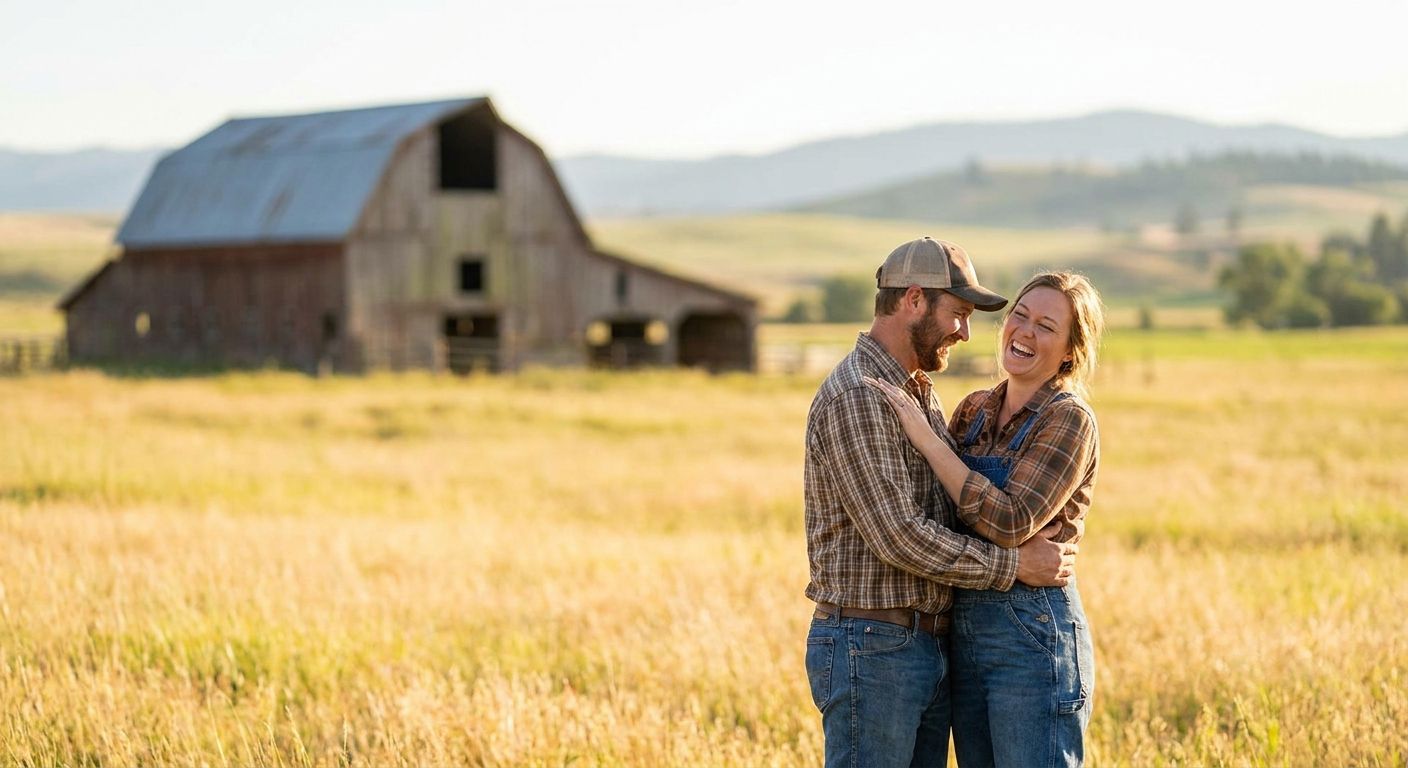
Farm engagement photos are outdoor engagement portraits shot on working farms, ranches, or pastoral properties, built around open fields, barns, fences, and animals as the visual backdrop. Couples who want this look need a location scout who understands mud, livestock, and shifting light differently than a couple shooting in a city park or studio.
- Farm engagement photos work best 60-90 minutes before sunset when working farms cast long, even light across open pasture.
- David Suns Weddings recommends scheduling farm sessions in September through November 2026 for foliage and cooler temperatures.
- Boots, layered fabrics, and muted tones photograph better on farms than bright white or heavily patterned outfits.
- Barn interiors need a second light source; open pasture rarely does.
- A 2026 farm engagement session runs long if animals are involved — budget extra time, not extra outfits.
Why farm engagement photos matter for this segment
Couples booking a farm session usually already know the property — a family farm, a wedding venue they've toured, or a rented pumpkin patch — which changes the planning conversation entirely compared to a couple picking a generic park. The location is fixed before the photographer conversation even starts, so the work shifts to timing, wardrobe, and managing the terrain and animals that make the setting distinct.
This segment also tends to book farm engagement photos as a preview of a barn or rustic wedding style, which means the images need to hold up next to wedding-day photography from the same aesthetic. Anyone shooting wedding photography for barn weddings knows the same light and texture challenges apply to the engagement shoot first. Get the engagement session right and the couple walks into their wedding day already knowing how the photographer handles their venue's quirks.
How to plan a farm engagement session
Scout the property before the shoot date
A farm changes by the week — crops get harvested, fences move, animals rotate pastures. Walking the property (or having your photographer walk it) inside 30 days of the shoot avoids surprises on the day.
- Note which fields are mowed versus overgrown
- Check which barns or structures are safe to enter
- Confirm fence lines and where livestock are currently kept
- Identify at least two backup backdrops in case of mud or crowding
- Ask the property owner about access hours and any restricted areas
Time the session around light and season
Farms have almost no shade in open pasture, so timing matters more here than in a wooded or urban setting. Late afternoon light, roughly 60-90 minutes before sunset, keeps skin tones even and avoids harsh overhead shadows on faces and hats.
- Fall sessions (September-November 2026) get golden fields and cooler temperatures
- Spring sessions catch green pasture but higher pollen and bug activity
- Winter farm sessions need a firm backup plan for mud and short daylight
- Midday sessions should move indoors to a barn or under tree cover
- Overcast days actually flatter farm settings — don't cancel for clouds
Choose outfits that hold up against dirt, wind, and texture
Farm terrain is uneven and often wet, so footwear and fabric choices matter more than they do in a studio or downtown setting. Bright white and busy patterns compete with the visual texture of wood, hay, and pasture rather than complementing it.
- Bring boots or closed-toe shoes, not sandals or heels
- Pick muted, earthy tones over bright white or neon
- Layer with a jacket or cardigan for wind and temperature swings
- Avoid delicate fabrics that snag on fencing or hay bales
- Bring a full backup outfit in a bag, not just a change of shoes
A full breakdown of what to wear and what to skip lives on the best engagement photo outfits for outdoor sessions page, worth reading before you shop.
Coordinate logistics with your photographer, not just the venue
Booking the farm is only half the plan — the photographer needs the same details the venue does: parking, access windows, and whether animals will be present. David Suns Weddings builds a farm engagement photos timeline around sunset, not around when the couple happens to be free, because the light window is short and non-negotiable.
- Share the farm's exact address and any gate codes in advance
- Confirm whether the shoot is on private land requiring permission
- Flag any animals that will be loose versus penned
- Set a rain-date or backup indoor plan before the week of the shoot
- Ask whether a second shooter is useful for a larger property
Work animals and props into the shoot without forcing it
Animals photograph well when they're calm and unhurried — chasing a horse or goat into frame reads as staged and rarely produces a usable image. The strongest farm engagement photos let the animal move naturally while the couple holds their position.
- Use feed or familiar handlers to keep animals calm, not strangers
- Keep animal interactions brief — five minutes, not thirty
- Have a non-animal backup pose ready if the animal won't cooperate
- Skip animals entirely if either partner has allergies or fear
- Ask the farm owner which animals are safe around unfamiliar people
Plan for weather and terrain backups
Mud is the single biggest threat to a farm engagement session, and it shows up with almost no warning after rain. A backup plan isn't optional here the way it might be for a studio session.
- Identify one covered structure (barn, shed, porch) as a rain option
- Bring a towel and a change of shoes for muddy stretches
- Reschedule rather than shoot through active rain on open pasture
- Check the forecast three days out, not the morning of
- Confirm the farm's cancellation or rescheduling policy before booking
Pick a second backdrop within the same property
One farm location rarely delivers every look a couple wants — pairing an open field shot with a barn interior or a fence-line portrait gives the gallery variety without adding travel time.
- Alternate wide shots (open field) with tighter shots (barn door, fence)
- Use natural framing — barn doors, hay bales, tree lines — instead of forced poses
- Save the golden-hour window for the open-field shots specifically
- Shoot barn interiors earlier in the day when light angle matters less
- Keep the second location within a five-minute walk to preserve time
Book your farm engagement session
Get a 2026 timeline built around your farm's light and layout.
Comparing farm-style locations for engagement photos
| Option | Best for | Key limitation |
|---|---|---|
| Working farm / ranch | Couples wanting animals and wide open pasture | Mud and livestock unpredictability |
| Pumpkin patch / orchard | Fall 2026 sessions with color and texture | Only viable a few weeks per season |
| Vineyard-adjacent farm | Couples wanting rows and structure in the frame | Limited access during harvest |
| Barn interior | Rain backup or moody, textured light | Needs supplemental lighting |
| Open pasture / field | Wide, airy shots with minimal props | No shade, no rain cover |
Each option shoots differently, and the right pick depends on whether the couple wants animals, structure, or open space in the final gallery — that single decision should come before outfits or timing get locked in.
Common mistakes couples make with farm engagement photos
- Booking midday instead of golden hour — flat farm light at noon flattens texture that makes the setting distinct in the first place.
- Wearing white or busy patterns — both fight the natural color palette of wood, hay, and pasture.
- Skipping the property walk-through — fences move, fields get mowed, and "the spot from Instagram" may not exist anymore.
- Forcing animal interactions — a spooked or uncooperative animal derails more time than it's worth if there's no backup pose ready.
- No rain plan — mud on open pasture cancels a shoot faster than almost any other outdoor setting.
FAQ
What's the best time of year for farm engagement photos?
September through November 2026 gives the strongest light and foliage for farm engagement photos, with cooler temperatures that hold up better for longer sessions. Spring works too but brings more bugs and higher pollen counts.
What should couples wear for a farm engagement session?
Closed-toe shoes or boots, muted earthy tones, and layered fabrics photograph best against farm textures. Bright white and busy patterns compete visually with wood, hay, and open field backdrops.
Is a barn or an open field better for engagement photos?
Open fields give wide, airy shots with strong golden-hour light, while barns offer texture and a built-in rain backup. Most couples get the best gallery by shooting both within the same session.
How much time should a farm engagement session take?
Plan for 60-90 minutes, longer if animals are part of the shoot since calm animal interactions can't be rushed. Sessions built around golden hour compress that window further, so timing matters more than total duration.
Do animals need to be part of a farm engagement shoot?
No — animals are optional and work best when calm and familiar with handlers, not forced into frame. A non-animal backup pose keeps the session on schedule if an animal won't cooperate.
What happens if it rains on the day of a farm engagement session?
A covered structure like a barn or porch serves as a rain backup, but shooting through active rain on open pasture usually isn't worth the mud risk. Rescheduling is the more common outcome when rain is in the forecast.
How far in advance should a farm engagement session be booked?
Scouting the property inside 30 days of the shoot catches seasonal changes like mowed fields or rotated livestock. Booking the photographer earlier than that secures the date, but the site walk-through should happen close to the shoot.
One last thing
The detail most couples miss: farm light changes faster than city or park light because there's no tree canopy or building shade to soften it, which means a 20-minute delay at golden hour can cost the whole session its best window. Build in a 15-minute buffer before the shoot start time, not after it.


