
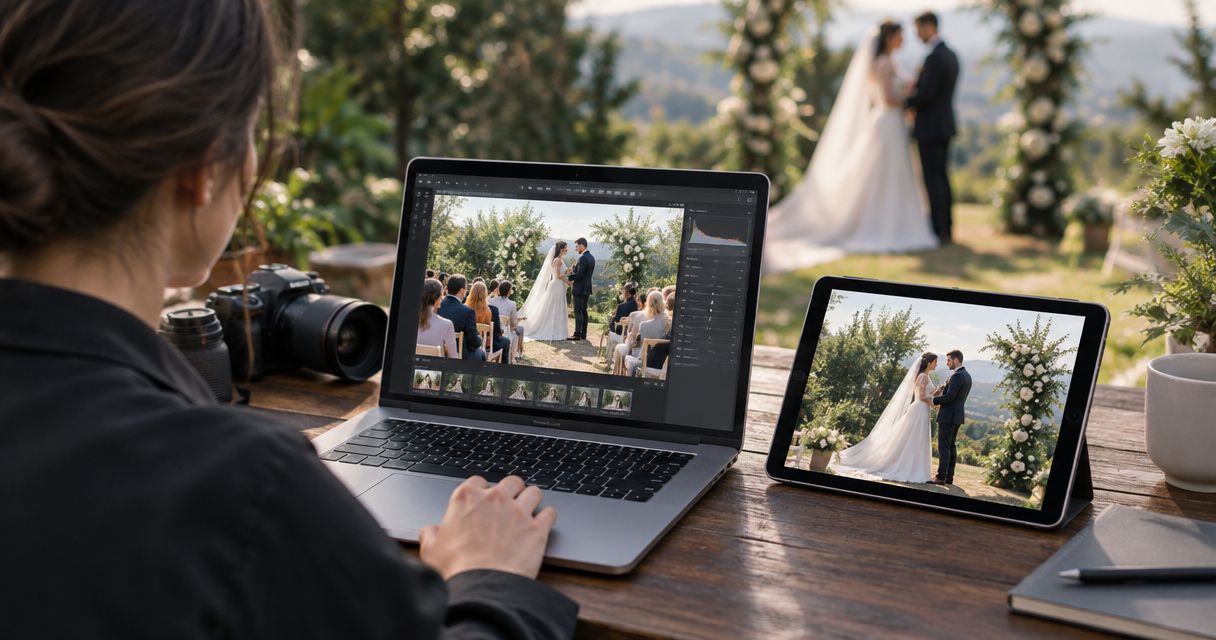
Yes, a wedding photographer can edit an unwanted guest out of a photo when the remaining image provides enough visual information to make the edit convincing. Removing someone who blocks a face, hand, or important moment is much harder: editing cannot recover details the camera never captured. In 2026, the best first move is to ask for an alternate frame or a crop, then request a removal edit for the images that still need one.
- Yes, a wedding photographer can edit out guests from photos, but removal depends on what the guest obscures.
- An alternate frame or crop is usually the better first choice when it preserves the moment.
- Ask whether guest removal is available before relying on it for a must-have wedding portrait.
Why this matters
An unwanted guest can be a stranger in the background, someone who stepped into a portrait, or a person you no longer want pictured beside you. Those are different editing problems. A photographer can remove visible pixels; they cannot know exactly what an obscured face, dress detail, or exchange of rings looked like behind someone else.
Decide which images matter most before requesting edits. If you're discussing wedding photography with David Suns Weddings, identify the people and moments you want documented, then ask directly about its guest-removal policy. Its availability and terms for that work are not specified here. A conversation before the wedding gives you a chance to plan portraits that do not depend on a later edit.
Can a wedding photographer edit out unwanted guests from photos?
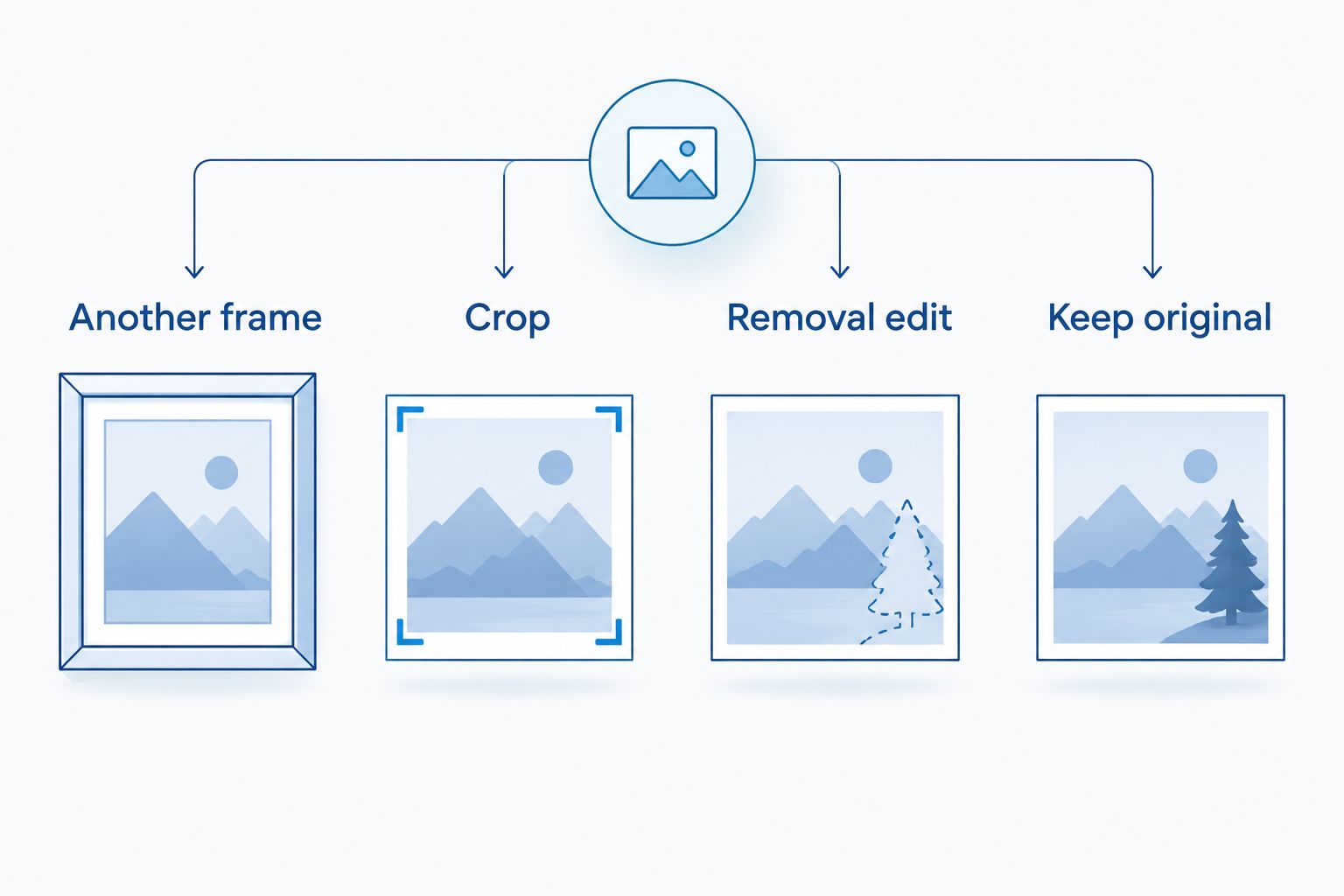
| Option | Best for | Advantage | Limitation |
|---|---|---|---|
| Choose another frame | A moment photographed more than once | Keeps an authentic photograph without reconstructing the scene | No alternate frame may show the expression or angle you want |
| Crop the photo | A guest near an edge | Removes the person without inventing background detail | Can cut out other people or important context |
| Request a removal edit | A guest against a background that can be reconstructed | Keeps more of the original framing | Overlap with faces, clothing, or hands makes the edit harder |
| Keep the original | A guest whose removal would change the meaning of a documentary image | Preserves what happened | Leaves the unwanted person visible |
The right choice is the one that preserves the people and moment you actually want to see. In 2026, editing tools can help remove visible distractions, but the tool does not settle whether the result looks natural or whether the photographer offers that service. Review the available frames before treating removal as the only answer.
A crop is not automatically a compromise. If the guest stands at the edge of a wide reception photo and the couple remains clear, a tighter frame can give you a stronger image. Conversely, cropping a family portrait to exclude one person can also remove the spacing and context that make the portrait work.
A removal edit has its own trade-off. A person against a plain, unobstructed wall leaves the photographer a simpler background to rebuild. A person standing in front of another guest leaves missing details that cannot be recovered from that single image. The photographer must assess the actual file, not just the description of the problem.
What should you send the photographer?
Make the request specific enough to assess against the original files. A message that says only to remove unwanted guests leaves the photographer guessing which people, which photos, and which parts of the scene you want preserved.
- Identify the exact image. Use its gallery filename or another identifier supplied with your photos. A screenshot can show the issue, but it should not replace the original image reference.
- Mark the person you want removed. State whether you mean one background guest or everyone in a particular part of the frame. If several people look similar, make the distinction explicit.
- Say what must remain untouched. Name any face, hand, bouquet, clothing detail, or part of the venue you want preserved.
- Ask to see alternate frames first. Another photograph from the same moment can solve the problem without rebuilding missing details.
- Ask whether a crop works. Specify if you need the wider setting for an album layout or prefer a closer portrait.
- Confirm the editing decision. Ask whether removal is possible for that file and what the agreement says about additional edits before approving the work.
This request is clearer than asking for a general cleanup of the gallery. It also lets the photographer tell you when a particular image cannot be changed convincingly. For a 2026 wedding, send priority requests while you can still identify exactly why each photo matters; do not assume every image needs the same treatment.
Keep the request focused on the finished photograph. Explain the visual change you want rather than asking the photographer to judge the relationship behind it. For example, identify the person at the edge of a portrait and ask whether another frame excludes them. The photographer can then answer a concrete editing question.
Why removal difficulty varies
The question is not simply whether software can erase a person. It is whether the rest of the photograph contains enough information to produce an image you would want to keep. These factors change the answer:
- What the guest covers. Removing someone from open background is different from removing someone who blocks the couple's faces, hands, or clothing. Hidden details are missing from that frame.
- Where the guest stands. Someone near an edge offers more cropping options than someone between the couple in a centered portrait.
- Background detail. A plain wall gives the editor fewer visible structures to match than patterned flooring, furniture, or a group of people.
- Light and shadows. A guest can cast a shadow or block light on another person. Erasing the figure alone can leave the scene looking inconsistent.
- Movement and overlap. Dancing guests, raised arms, and crowded group photos create more intersections to resolve than a still, separated figure.
- The final use. An edit that passes unnoticed on a small screen deserves closer inspection if you plan to display it prominently or print it in an album.
These are image-specific factors, not promises about what any photographer can deliver. Ask to review the actual photo at the size that matters to you. A photographer should be able to explain whether the proposed change preserves the moment or creates an obvious reconstruction.
Is cropping better than editing someone out?
Cropping is better when it removes the unwanted guest without sacrificing the people or setting you care about. It changes the composition but does not require the photographer to invent a hidden background. If the crop removes a parent, an important architectural detail, or the reaction you wanted, ask for another frame instead.
Consider where the guest sits in relation to the subjects. At the edge of an aisle photo, a crop can leave the couple and ceremony intact. In the center of a group portrait, the same approach can cut the group apart. Neither option is universally better; the finished composition decides.
You can request both versions for discussion: one crop and an assessment of a removal edit. That is a request for options, not an assumption that both will be delivered. In 2026, clarify what your photography agreement includes before counting on either version for your album.
Can a photographer remove someone who blocks the bride or groom?
A photographer can remove the visible person, but a single photo cannot reveal the exact details hidden behind them. If the guest covers part of a face, the result depends on reconstruction or another image that shows the missing area. An alternate frame is the stronger first choice when it captures the same moment clearly.
For planned portraits, avoid creating this problem in the first place. Tell the photographer which groupings you want and identify anyone who should not stand in those frames. If family arrangements are sensitive, share a written portrait list with the people coordinating the groups. The goal is a usable original photograph, not a difficult repair afterward.
Candid moments need a different expectation. You cannot position every guest during a ceremony or reception without changing what happens. Prioritize the images that carry personal importance, and accept that an honest record of a crowded moment includes some people you did not choose as subjects.
Can you ask to remove an ex from wedding photos?
Yes, you can ask; whether a convincing edit is possible depends on the photo. Identify the images that matter and ask for alternate frames, crops, and a feasibility assessment. Do not assume removing someone from every photograph will leave the story of the day unchanged.
Start with the images you expect to revisit: a formal portrait, a ceremony moment, or an album selection. If the person stands at the edge, a crop might meet your goal. If they overlap the couple or another family member, the image may not contain enough detail for a natural-looking removal. This is a visual constraint, not a judgment about why you made the request.
Can a photographer remove guests from every wedding photo?
No single answer covers every wedding photo: each frame has different people, backgrounds, and overlap. A photographer can assess selected files, but one successful edit does not establish that the same approach will work across an entire gallery. Choose the images you need changed rather than issuing an open-ended request.
Also distinguish between an edited selection and the gallery as delivered. If you want a version for an album and a version for sharing, ask how the photographer handles those requests. The supplied information does not establish David Suns Weddings' editing, gallery, or delivery terms; confirm them directly before booking or requesting a revision.
What should you agree on before the wedding?
Plan the portraits first; reserve removal requests for problems you could not prevent. Give the photographer a list of essential groupings, tell the person helping assemble family portraits who belongs in each one, and make time for a frame without extra people. Those steps protect the photos you know you will want.
For 2026 bookings, put the editing question in writing: ask whether guest removal is offered, whether it applies to selected images, and how you will review the proposed result. Do not rely on a general description of retouching. That word can refer to changes very different from removing an entire person.
David Suns Weddings is best for couples seeking wedding photography and videography who want to discuss their priority portraits before the wedding. That verdict does not promise guest-removal editing. The practical advantage of an early conversation is that you can identify difficult groupings and ask for clear answers; the limitation is that the feasibility of removal remains tied to each finished frame and the photographer's stated terms.
If privacy is the concern rather than appearance, say so explicitly. Asking who appears in a photograph is separate from asking how that photograph will be shared. Discuss the use of sensitive images directly with the photographer instead of assuming that an edit to your copy changes any other use.
FAQ
Can a wedding photographer edit out guests from photos?
Yes, a wedding photographer can edit out a guest when the remaining scene can be reconstructed convincingly. A guest who blocks a face or another essential detail makes the request harder.
Is cropping better than removing a guest from a wedding photo?
Cropping is better when it excludes the guest and keeps the people and setting you want. Choose another frame if the crop cuts away an important part of the moment.
Can a photographer remove someone standing next to me in a portrait?
A photographer can assess that edit, but a person standing close to you can obscure clothing, arms, or background detail. Ask to see another portrait frame before requesting removal.
Can I ask my photographer to remove an ex from a wedding picture?
Yes, you can ask for a selected image to be assessed. Identify the person and image clearly, then discuss an alternate frame, crop, or removal edit.
Will removing a guest change the original wedding photo?
A removal edit changes the visible content of the finished image. Ask how the photographer handles edited versions and original files under your agreement.
Should I ask about guest removal before booking?
Yes, ask before booking if the option matters to your decision. Confirm whether the photographer offers it and how requests for selected images are handled.
Can a photographer remove a guest from a ceremony photo?
A photographer can assess the ceremony photo, but removal depends on where the guest stands and what they hide. An alternate frame often preserves the ceremony moment more faithfully.
One last thing
The most useful question is not whether a guest can be erased. It is whether you already have a better photograph of the same moment. For your 2026 album selections, compare the alternate frames before spending your attention on an edit that must rebuild what the camera did not see.


